Revisiting Memories of The Joy Luck Club: Representation, reflexivity, assimilation, and dialogues across barriers
This is an archived post from Substack from Feb 7, 2025
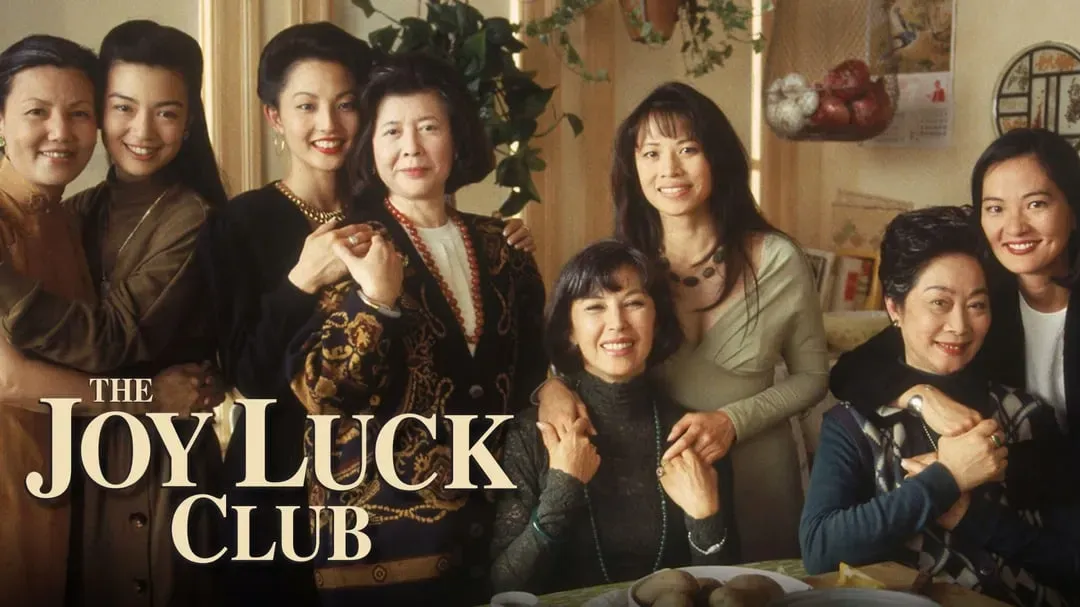
On a lazy Tuesday afternoon, I came across Quality Culture’s video essay on The Joy Luck Club and its influences on Asian representation. Having read and taught this book almost a decade ago, I was intrigued to revisit the nuances I may have missed as a young teacher at the time. I remember enjoying the movie and appreciating the difficulty of adapting such an epic. The Joy Luck Club is made up of eight short stories, compiled into an overarching story between two generations of Chinese women—four mothers and their four daughters—and their arrival and survival in America. As a piece of media that continues to be ahead of its time in many ways, it will always hold a special place in my heart.
Quality Culture’s essay invited many perspectives into the discussion, and offered a far more pithy and complex viewing of this classic immigrant story that I really appreciated. Any commentary I have about The Joy Luck Club itself would not be superior to Quality Culture’s interviews with other Asian-American creators, so if you’re interested in a deeper dive of the work itself, I highly recommend the video!
The truth is, I hadn’t intended to write on The Joy Luck Club, but the same evening I began the video, I had to pause my viewing and go to class, where an incident sparked my imagination in a way I did not expect. With The Joy Luck Club was on my mind, I’d begun to draw parallels in a way I had not been able to understand until I began to work through this essay.
As such, I am tackling Joy Luck Club and its representation of Chinese-American womanhood as a way to really explore the ways in which our identities have been eroded by our own hand through assimilation and the consequences of shifting and missing identity.
The most concise way to describe the incident is white supremacy involving an older white man who must’ve thought he was being punk rock by riling folks up, but was really just parroting the kind of conservative anti-inclusion talking points I’m sure he will purport to hate. It is incredibly difficult, in my opinion, to have to bear witness to a man so publicly flagellate his own soul with his arrogance. At the same time, there is something jaw-dropping about how quickly and how intensely the entire room of majority women— some queer and racialized like myself—felt the danger in every cell in our bodies. He made no attempt to hide how much he reveled in this power, and I had two reactions to this: my lizard brain wanted to tell him to either learn to be a decent human being or be a cunt—you can’t be both in this situation. And if he must choose the latter option, do it far, far away from me, my friends, and this profession. Maybe try the middle of the ocean. The therapist brain, however, has led me to ponder this essay. The reality is that men are becoming more radicalized and lonelier than ever. The violence that is enacted on so many populations is cyclical, and contingent on the fact that no one’s needs are being met while we are yoked to the falsehoods white supremacy and capitalism has poisoned us with.
In a twisted sort of way, the more we desire to exclude the threatening presence of our perceived oppressors from our lives, the more those who uphold oppression will pull on their blinders and burrow into their own pain, becoming powder kegs to the spark of rhetoric aimed to weaponize them. We see this in the many policy changes every day that seem to serve no purpose but fanning hate. Do white men feel less lonely because trans youth can’t access gender affirming care? Considering the rhetoric of feeling excluded and silenced by “political correctness” and “wokeness” while simultaneously holding the largest platforms to have their voices heard—I think the permission to speak their thoughts has only further isolated them from themselves.
Now, you might wonder…what do ill-informed and ill-willed displays of cis-het-white-male supremacy have to do with a story about Chinese immigrant women in the 90s?
Well, in the way we must at all times negotiate and renegotiate systems of power, perceptions of power and powerlessness: everything.
Follow me as I try to untangle this little ball of yarn stuck in my brain.
The American Dream
One of the challenges of teaching The Joy Luck Club, and likely one of the challenges Tan faced in writing and publishing this story, is the process of simplification. As a series of short stories involving two generations of Chinese immigrants, there are nuances that are lost when two worlds must collide, particularly when few other stories made it into the mainstream in the same way. Tan herself as a second-generation Chinese-American, may see things through a series of funhouse mirrors tainted by nostalgia, romanticism, and intergenerational trauma. In the West, our default ways of viewing the world is inevitably rooted in orientalism, particularly when we have every incentive to divorce ourselves from our ancestors and non-white culture as a whole if we are to survive. Sundial captures the melting pot experience beautifully in “the american dream,”: the five years the singer spends getting rid of her accent, the inability to communicate with her parents, the nostalgia for her grandmother’s cooking that she’d thrown away in seventh grade, and the echoing line of “Where can I go/if I’ll always be a stranger in my home?”
This sentiment is further amplified by Akira Ritos’ painful evocations of envy, perhaps desire for the privilege of power and ignorance, in “young american boy1.” We imagine, perhaps, there is another side that will never experience what we go through, and it must be nice.
In another life,
I loop a pin-striped tie at breakfast.
Father flicks his newspaper, burns Marlboros
with his eggs sunnyside. Mother’s pearly-whites
glare across an oak table. We sit in English, gasp
at sports. The haunting of a war does not slumber
on our shoulders. In another life, my grandmother
lives down the block, remembers my name. Speaks
in an accent I don’t moisten my tongue with. I pray
and God answers me, always. I cross the street
without hesitance. The cops wave and I smile,
thin-lipped and bare. So tonight, I will drive
in my clean, white suburbs. Tonight, I will sleep
without a twitch or scream or sorrow. No dreams
of bleach washing my skin, scrubbing my brown
like mud off a new shoe.
This relentless negotiation of our identities, speaking purely from an East Asian diasporic lens, has divided us—amongst and within ourselves above all. False promises of acceptance, of prosperity, is compounded by the erosion of our ancestral and historical contexts. In Joy Luck Club, we see in the stories of the daughters this desperation to be American—to be not like their mothers, to strip themselves back until they’re only a silent extension of their white husband, in the case of Rose.
One critique that Quality Culture expresses was this depiction of China and Chinese culture as this mystical thing while simultaneously painting a backdrop of war and pain and deep human cruelty, as if that colours all that we are as a people. The trouble is that The Joy Luck Club is one story that unexpectedly took on the burden of being the story to represent all the nuances of Chinese and Chinese-diasporic culture. There simply wasn’t space—or even intellectual capacity, perhaps, when anchoring this story from within the perspective of the Western imperialist fish bowl—to acknowledge the role of the West in the devastation and continual exploitation of our people and the subsequent self-destruction that followed its wake.
In erasing this part of our history, we also erase the moments of unity and the relationships that saved us—we would not be here if not for the Indigenous communities who picked us up when the white men discarded us. Instead, we condense one of the oldest, most diverse civilizations in the world into a hundred years of coping with devastation caused by the chokehold of persisting Western ideology, until we see our own culture as poor and backwards and violent. Alternatively, as the jackass in my class posited, China is seen only for its totalitarian death grip on its people, and therefore symbolic of the progress a society can make without spending every few minutes pausing to deliberate the ethics of inclusion, citing its advancements in AI and conveniently ignoring (or willfully not noticing) the idolatry of the West and the self-hatred that has made refugees and slaves of its own people. But that, in the eyes of white supremacists, is progress, I’m sure.
I’ve felt for some time that many East Asian folks, regardless of the level of entrenchment in western society, have begun to lose ourselves in the same way that I feel many participants in white culture have begun to lose themselves, albeit with differences in perceived privileges. The term marginalization, speaking to being pushed to the margins, also represents a spectrum of power and powerlessness, manufactured ceilings that put a cap on how close to power we can be, and our desires for proximity to power. But what does it mean when we aspire to power? I once taught a Chinese student who named himself after the same President who ostensibly revived the yellow peril sentiment in 2020 (among all the other atrocities he’s currently committing every day). Did he feel closer to power, I wonder?
How would that type of power heal us? Particularly when power seems only to be defined by a level of collectivism that cannot extend past one’s most intimate social spheres. In other words, what happens to us when we lose ourselves in a never-ending pursuit to leave the margins at all costs?
As Saidiya Hartman2 says, “So much of oppression is about policing the imagination.”
The Mirror
There is a powerful image in the 1993 Joy Luck Club movie where Waverly and her mother, Lindo, looks at each other through the mirror. This scene is ripe with analysis on the bridging of generational division: Waverly is exasperated by her mother’s lack of warmth toward her fiancé—a blonde white man like so many that these Asian women end up marrying—while Lindo says in a voiceover, “I could see her face looking at me, but not seeing me. She was ashamed—ashamed to be my daughter.” We then go into a flashback of young Lindo carrying the hopes and dreams of her mother, who was the center of her world. In Waverly, she saw only shame, as if nothing she said mattered. There is a clip on YouTube of the scene that follows: Waverly sees her mother’s tears, asks why she doesn’t approve of her fiancé, and confesses that nothing she does ever feels like it’s enough, and she doesn’t understand the power she has over her: "One word from you, and I’m four years old again, crying myself to sleep.” Lindo responds with a smile and says, “Now you make me happy.” They burst into laughter, and it’s the one time they really, truly bond.
Ritos, A. (2024). young american boy. In ALL OF THEM ALL OF THEM (p 6). Baltimore: fifth wheel press.↩
In my quest to find the source of this quote, I came across an article on academic exhaustion and “community building for the end of the world”. Both this article and the webinar where Saidiya Hartman spoke are excellent.↩