Nico Minoru and the Cost of Excellence
Power, pain, and reflections from the witches of Marvel
This is an archived post from Substack from April 25, 2025
In 2018, I went to China to teach the Canadian curriculum in a small off-shore school. Though it was only two years of my life, it was a difficult time for staying connected to…well, anybody and anything really. The time difference and the Great Firewall resulted in what felt like four years of quarantine. At the same time, I have a lot of happy memories with my friend, Merlin, as well. We watched nearly a movie a day, consuming almost the entire roster of Oscar nominations in 2019 in addition to all media we wanted to show each other from our childhoods, decades apart. In many ways, isolated and ensconced in our own little worlds, it was a time of great incubation, of harnessing culture to shape my inner world, pulling on strands from another’s story alongside my own.
One of the shows Merlin and I watched together was Marvel’s The Runaways, a niche adaptation of a niche storyline that I picked up to fill that little queer void. It was a show that unfortunately had a lot of potential that didn’t go anywhere, but for the first season, it really felt special. It was a very diverse cast with interesting back stories, new actors who embodied the characters in a way I found compelling (except the one white boy—I know his name, but it’s heartbreaking to me that he’s the only one who seems to have gotten a career after this show. Also, just some not so great vibes from him.)
Unexpectedly, in the wake of DEI shutdowns across Turtle Island, I found myself thinking about those of us still trying to survive within institutions and those of us seeking refuge in this tumultuous time. Strangely, I found myself thinking about the Runaways, specifically one of the coolest characters in Marvel lore in my unbiased opinion, Nico Minoru.
In case you’re interested in watching a nearly decade old show now that doesn’t seem to have any chance of revival (unfortunately), spoilers ahead.
This plot summary is not spoiler-free
Disclaimer: I have not seen the show in many years, and am mostly going off the things I remember. I apologize for the tangents, as I don’t want to take up too much time on summarizing this story, but do get a bit too excited about fun facts, especially on queer Marvel history. Later, there will be spoilers on other recent shows about magicians, specifically Wandavision and Agatha All Along.
The Runaways follows a group of wealthy teens who run away from home after learning that their parents were a part of a secret alien cult who have been sacrificing young women (who would not be “missed” for various reasons”) for many years in order to retain their wealth and power. A lot of intergenerational conflict ensue, people run, people fight, people make out—that’s about all we need. There are a lot of differences with the comics and the show, but because they work together to paint a rather interesting picture, I’ll be discussing them in tandem when relevant, with a bit more emphasis on the show as it’s my entry point into this series.
In a fairly Breakfast Club kind of way, here is a small cast breakdown to further give you a sense of this show:
Left to right: Gert, Nico, Alex, Chase, Karolina (lol this pose), Molly
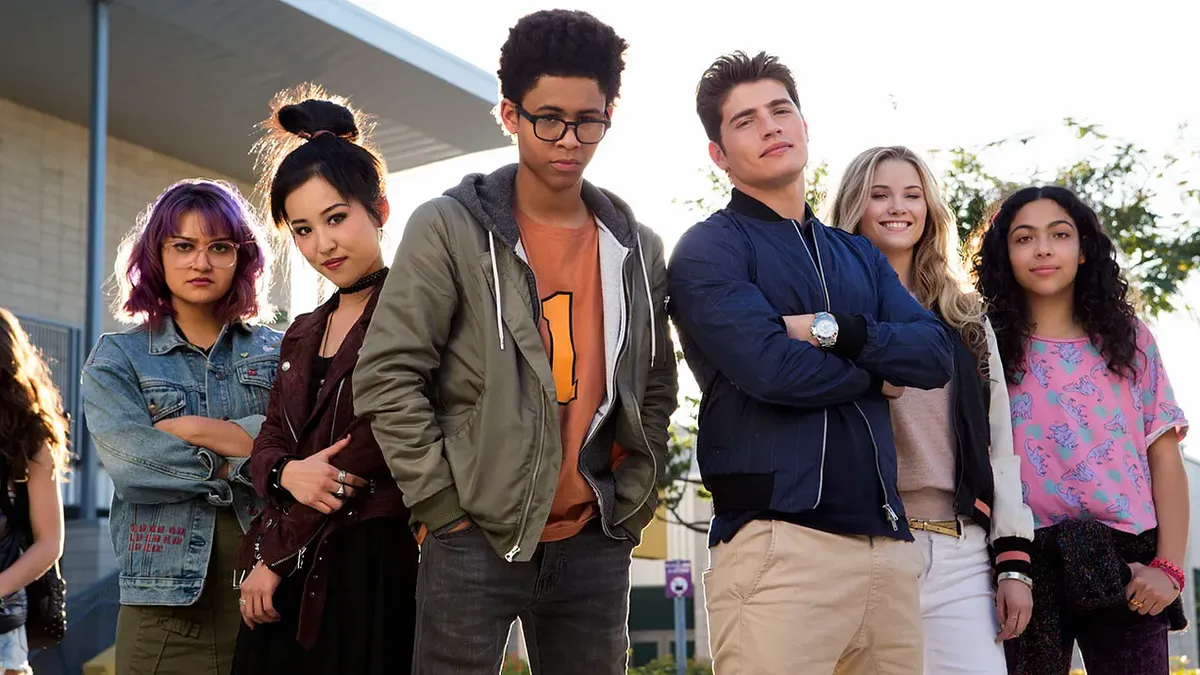
- Alex, the token nerd. Son of a powerful attorney in a pretty interesting matriarchal family who upholds the institution within the carceral system. There’s a lot to be said about this family’s representation of Blackness, the cost of Black excellence, and what it means to align with power, but that might be beyond the scope of this particular post. In the comics, he is secretly aligned with the parents and betrays the group even though he had originally taken a leadership role that later falls on Nico. Alex and Nico have a bit of an unhealthy, checkered romantic past that the show luckily cuts short.
- Chase, the token jock. His family isn’t unlike the Tony Stark of the west coast. They’re tech people with egos and a rather dysfunctional relationship with everyone involved.
- Gert, the token weirdo. The hippie scientist family that love their kid, but get roped into all sorts of shenanigans, including somehow getting Gert a pet velociraptor named Old Lace (cute). Gert is dead for most of the comics, with Chase spending much of his energy on trying to invent time travel so he could save her—the trauma is spared in the show.
- Molly, the token kid. Adopted by Gert’s parents and in the show, is played by Allegra Acosta, leading to some effort to explore the cultural disconnect. Sadly, though there are other Hispanic characters in the show, they left out a key member of the comic team: Victor Mancha (who is Mexican, but also cloned from Ultron and offering a terrifyingly relevant point of view on what it means to be a human perceived as evil by mere existence), who would’ve opened even on more doors. Fun fact: In the comics, Nico enrolls Molly into Xaver’s Academy at some point to try to give her a normal education/childhood. The show explains Molly’s supernatural strength as aliens, but if people were allowed to make art they love, there’s definitely room for an X-Men crossover :’)
- Karolina, the token good girl. The cult of the alien is headed by Karolina’s parents, and she is very much coded as someone who has spent her entire life in church, only to realize…uh oh, she’s a homosexual! She also learns that her real father is the alien they worship all along, and being half alien, she also has superpowers: rainbows! Yes, she can fly, but more importantly, she can shoot rainbow lights from her hands. Double homosexual! Most of her personality, however, is that she’s been in love with Nico forever.
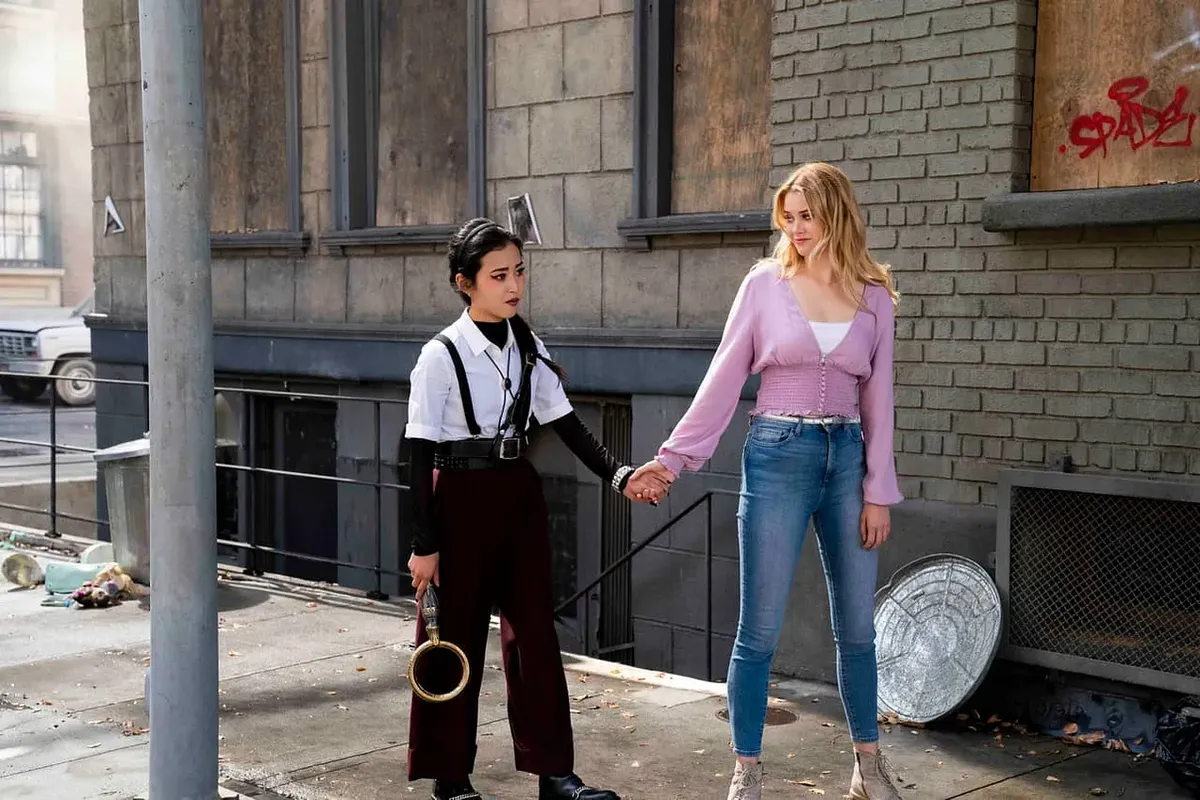
Nico and Karolina have a lot of great scenes together since they start dating quite early in the show, but this one made me laugh
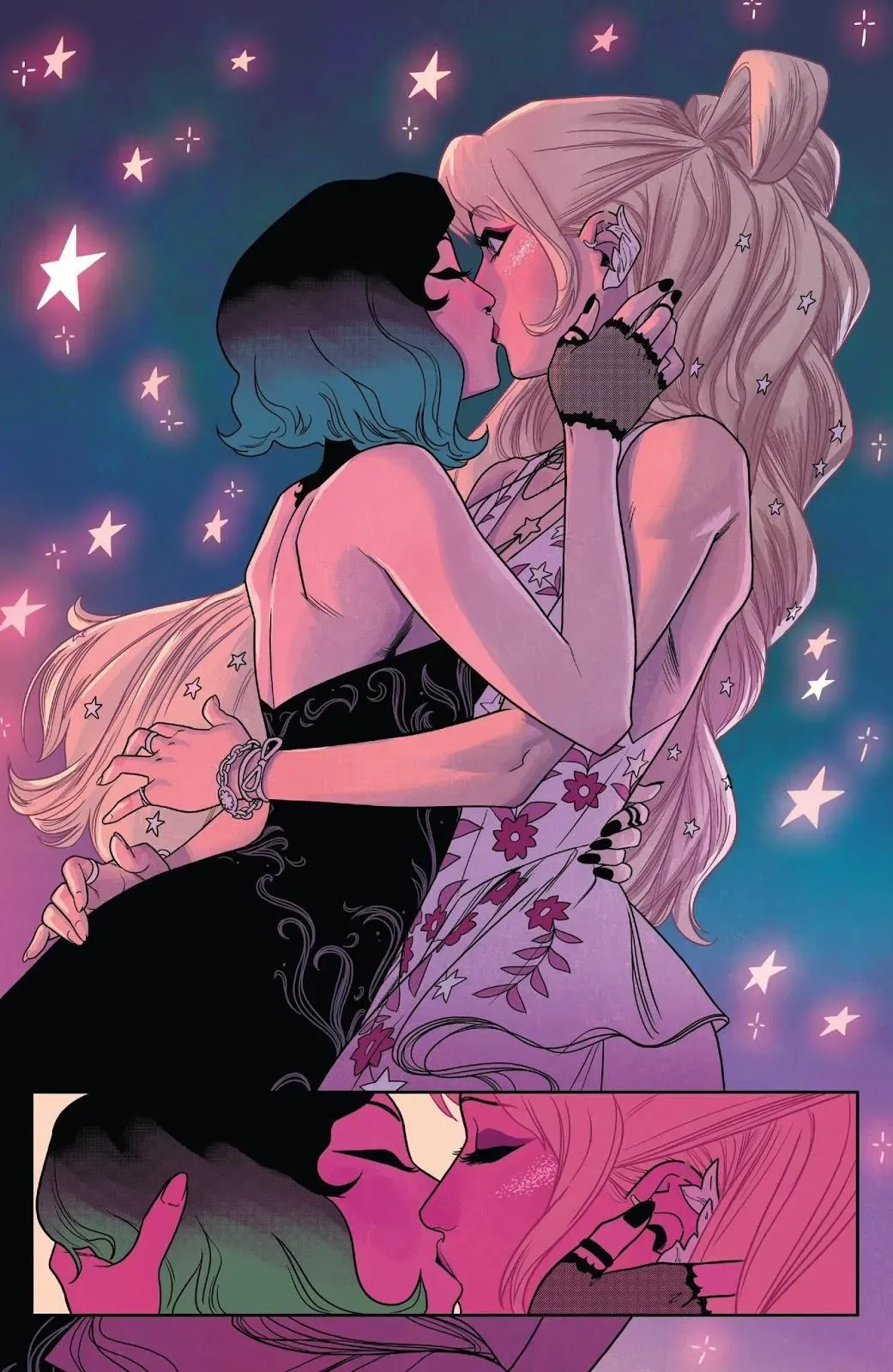
The iconic first kiss that comic fans waited fifteen years for
Finally, we have our feature presentation: Nico Minoru, the token goth girl. The Minorus own the Apple of the Marvel universe, and are by far the most fleshed out family in the whole show. She also comes from a long line of witches, and deeply embedded intergenerational trauma. In the comics, she is good friends with Scarlet Witch’s son, Wiccan, as they are both deeply traumatized individuals who are immensely powerful and trying to figure out how to best love their (queer) golden retriever partners.
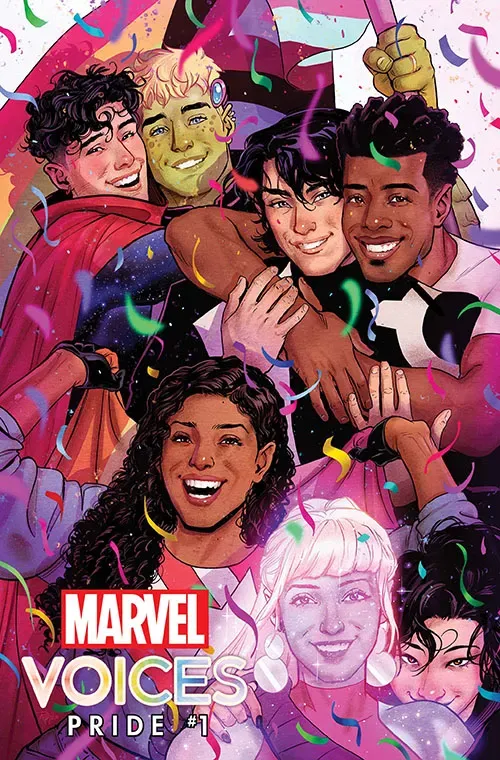
Just a few of Marvel’s queer royalty - top to bottom, left to right: Billy Kaplan (Wiccan), Teddy Altman (Hulkling), Jean-Paul Beaubier (Northstar), Kyle Jinadu (just some guy Northstar married in Marvel’s first gay wedding ever), America Chavez, Karolina Dean, Nico Minoru. Missing alongside America because Marvel refuses to acknowledge them as a couple: Kate Bishop (Hawkeye)
Why Nico?
Because she’s cool, I love her, and she is one of the greatest queer IBPOC characters in comic book history—I mean, how many can we really name?

But also, she represents a rather interesting dichotomy between power and pain, both literally and figuratively. Power is represented by the source of Nico’s magic, the Staff of One, an ancient artifact inherited from generations of women in her family. With the staff, she can do nearly anything she can imagine. Pain is the cost and limitations of this magic: Nico must bleed in order to summon the staff, and each incantation can only be used once. (Side note: her list of spells is quite funny, as she needs to be pretty creative with her wording in battle. For example: “Freeze to the Exact Temperature and Aesthetic Appearance of a Cheap Popsicle from a 7-11” and “Pagalingin”, the Tagalog word for heal, as she requires healing spells often and needs to memorize them in different languages so she can use them more than once—talk about Asian excellence!)
Same, Kate Bishop, same…
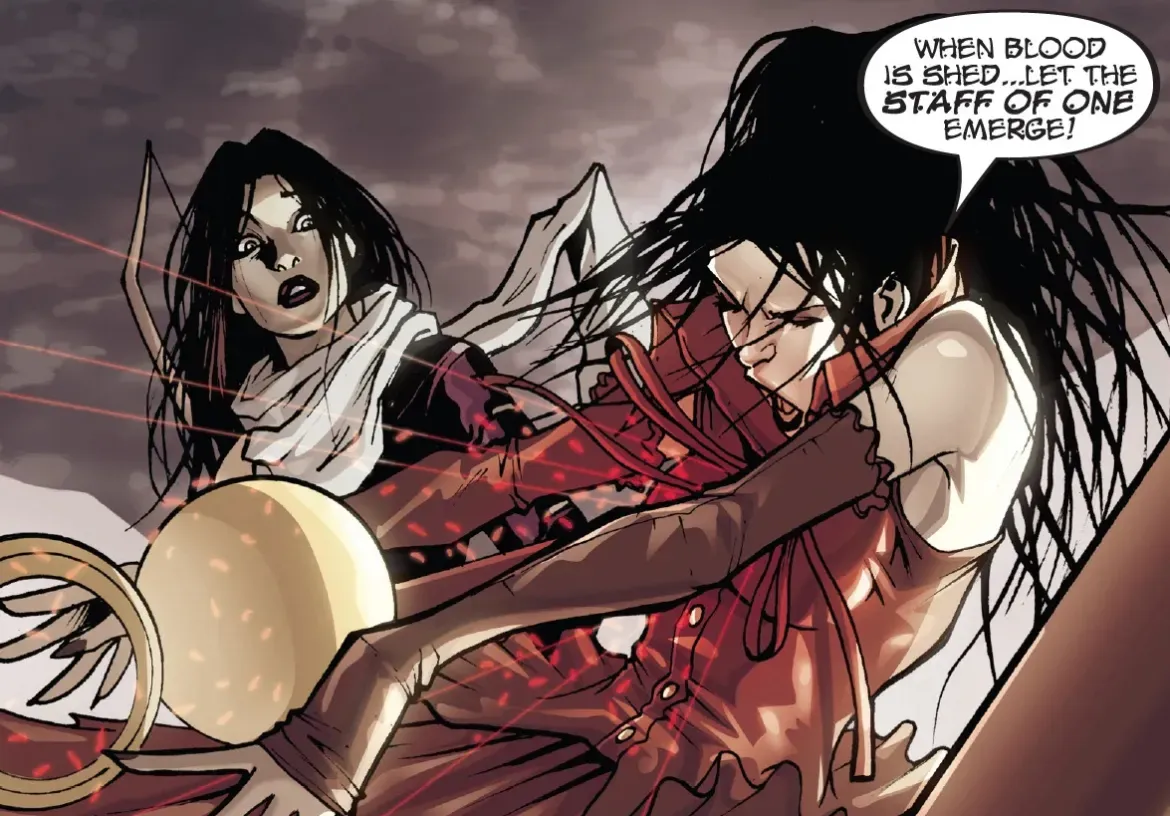
The show forgoes the dramatic blood ritual and replaces it with a prick of the finger. Unfortunately, it did once send Nico to some sort of shadow realm where she is tortured by her ancestors in order to grow her pain tolerance and evolve her powers, something that happens in both versions albeit through different means. It’s safe to say that Nico has been through a lot, and that’s without going into her time on Murderworld.
In a world where magic runs pretty rampant with the likes of Doctor Strange and Scarlet Witch, it feels telling that Nico is the one that has to carry a first aid kit around whenever she goes.
Simultaneously, her character seems to say that one must expand resistance to pain in order to absorb more pain, and one must be able to absorb more pain in order to achieve more power. In Nico’s case, the pain of wielding her power led to her eventually refusing to summon the Staff through a convoluted and unresolved plot point, as each time she summons it, she releases more evil into the world. Arbitrarily, there is a vicious cycle of pain and guilt that few other magic users in the Marvel universe face. Few others need to negotiate the pain of enacting their power or navigate the ethics of power before taking action.
To juxtapose Nico with a couple of other magic users, spoilers ahead.
In Agatha All Along, for example, each magic user was shackled after Agatha’s betrayal, and we follow their journey in rediscovering their power. While the trials are painful in many ways, it is understood that power is intrinsically worth it. Once obtained, it’s implied that power will erase the pain. Acts of magic are never questioned until after the fact, even when people are hurt. Even when the ethics of magic and deception are briefly discussed, there is no effort to limit the use of their powers—it is never up for debate whether one should simply relinquish their quest for power. Magic users desire magic—period.
(Side note: really enjoyed the show though. Amazing queer icons. With the entrance of a certain someone, I am mildly optimistic at the possibility Lyrica Okano can return to the MCU as Nico.)
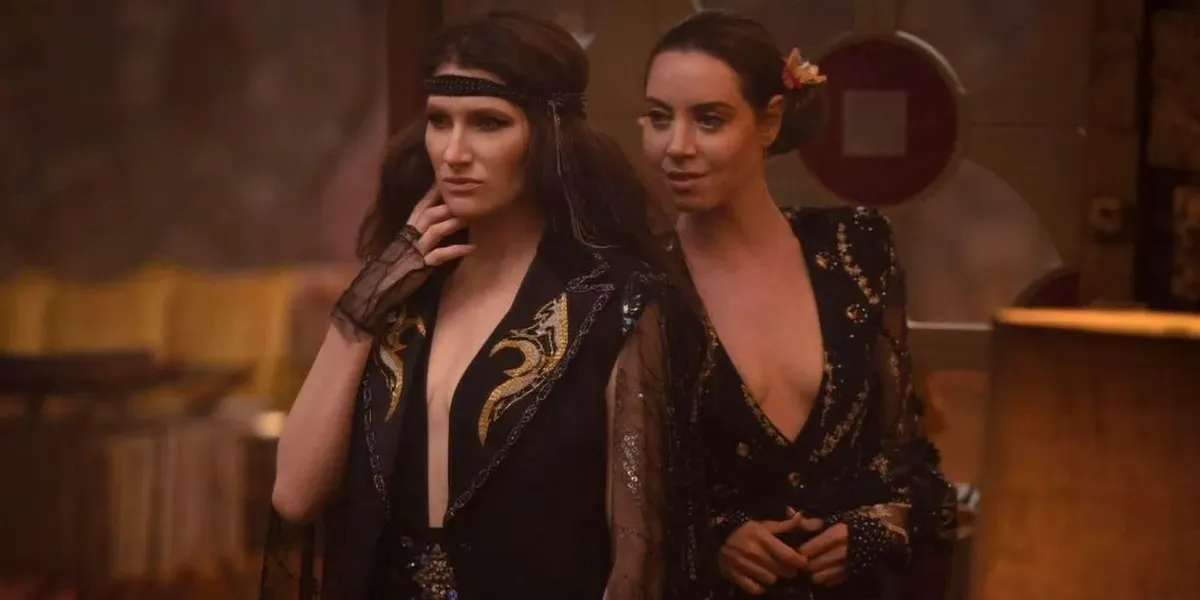
Absolutely unexpected chemistry between Kathryn Hahn and Aubrey Plaza. Also a dissertation in itself on navigating difficult relationships with grief.
Toothless Power and Symbolically Annihilated Pain
Lately, I’ve been thinking a lot about the figurative implications of Nico’s power. Specifically on my mind is how easily tokenization allows us to be discarded, especially during a time of heavy censorship and new interrogations of what people in power want our countries to look like. In Rehearsals for the Living, Leanne Betasamosake-Simpson writes about the need to resist against institutions that have historically failed Black and Indigenous communities:
Imperialism and ongoing colonialism have been ending worlds for as long as they have been in existence, and Indigenous and Black peoples have been building worlds and then rebuilding worlds for as long as we have been in existence. Relentlessly building worlds through unspeakable violence and loss. Building worlds and living in them anyway.
I think about those of us living in our marginalized identities, yet comfortable in the privileges that we’ve been given—too comfortable, perhaps, to see the end of the world beyond the fire and brimstone colonialism has shaped us to expect. What does the end of the world look like to those who have experienced it over and over again?
I am reminded of a recent incident in which I’d forgotten to bring a bottle of water to class. At break, I follow a friend out to the food court, where I then wander over to the vending machine. After gawping at the prices, my friend says, “You know, you can just ask for a cup of water.”
“Wait, you’re right. I didn’t think of that,” I responded dumbly.
My friend laughed and explained that they’d grown up poor. “Don’t take this the wrong way, but you’re used to a certain level of convenience, aren’t you?”
I get my cup of tap water and think this over for a bit. “I guess so. My family has always been like that. Even when we didn’t have a lot of money, there were certain luxuries we tended to prioritize.”
But that is the point—convenience and comfort are luxuries for many, and in being steeped in it, I am cognizant that many who share the privileged intersections of my identity have not had to build worlds. We have not had to imagine new worlds despite the ways this world mistreats us. In frequent conversations with my mother, I am told not to rock the boat, to simply do a good job and that will show ‘em. Despite decades of relegation into specific pieces of the pie crust, we are meant to be satisfied. More than that, we are conditioned not to see the ways worlds have ended around us, and if we do—well, there’s nothing we can do about it. Maybe we can work our way to the top, make a bunch of money so we can donate it, or whatever excuses our capitalist cisheteropatriarchal society has fed us.
Yet, there is a cost to the privilege of power—and arguably, the privilege of unseeing and unknowing is power—even the delusion of power. How many of us enter spaces with the hope of change, with the desire to make a difference, only to break our teeth fighting for absolutely nothing. Last summer, I was harbouring a fair level of resentment toward a woman of colour in what I perceived to be a position of power, and a friend—in defending this person—shared this infographic with me on Instagram (@natachapennycooke.therapy):
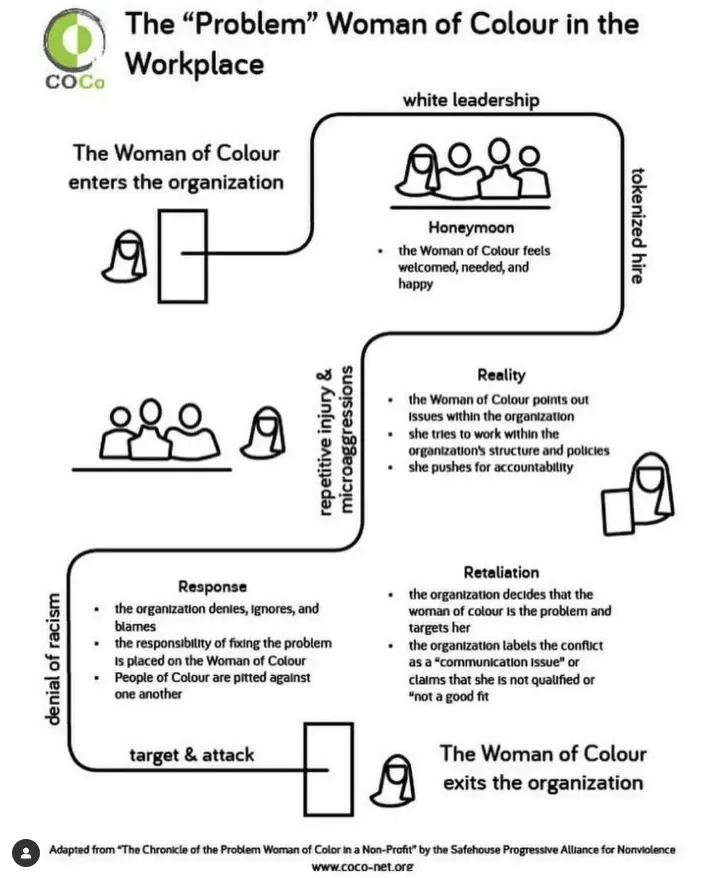
When I finally took the time to have a heart-to-heart with this woman, I felt scammed. She’d been thrown into the fray by white leadership, equipped with half the information and a prayer, sitting in a position that was devoid of meaningful power, having been created as one of the many post-George Floyd virtue signalling projects the institution took on. While we directed our energy at her, white leadership was absolved of blame for the harm caused. Pushed toward despair, perhaps it was easier to turn against each other—to admit this pain isn’t worth it—than to hold leadership responsible.
When I look at the leadership team at this particular institution, the only way to have power as a person of colour is to inhabit all the qualities of white leadership. We’ve seen this all around Turtle Island and beyond—having a marginalized identity doesn’t mean you are exempt from white supremacy. There are those who desire power and have expanded their tolerance for the pain through assimilation—that is a different level of grief altogether, particularly when your own communities turn away from you. My personal observation is that those who are willing to undergo complete assimilation is in the minority. The majority are the Nicos of the world—endlessly negotiating, forever wondering if power is worth the pain.
During the past few weeks, I’ve been thinking about what leadership means—though it began as a wholly uninspiring assignment as a class, the concept has grown more complex over time. When I look around my cohort, I am hit with the realization that any of these nice white women, despite having never spoken up, never engaged with discourse that was too “difficult”, could someday be leaders in social work, an industry that seems to adamantly eat its own tail, forever perpetuating harm at all levels of the institution rather than consider how we can work ourselves out of a job. Any of these nice white women could be my boss someday. These are going to be the people who have the power to change the lives of others without consideration for the ripple effects of upholding harmful systems.
And I found the thought unacceptable.
To me at my most extreme, those who do not understand Nico and the politics of negotiation can only be the Scarlet Witches of the world—enact your power, never ask questions, think about the consequences of your actions later (maybe even grieve a little). Her comfort, her discomfort, her grief is always at the center of her world and through her power—through the manipulation and enslavement of a whole town—it is the center of everyone else’s world too. Once the glamour fades, who is left to deal with the moral distress? Once she leaves town, who’s left to look each other in the eye and remember all the things that they had to do against their will?
An all-American family this wholesome, they can’t possibly be wrong!
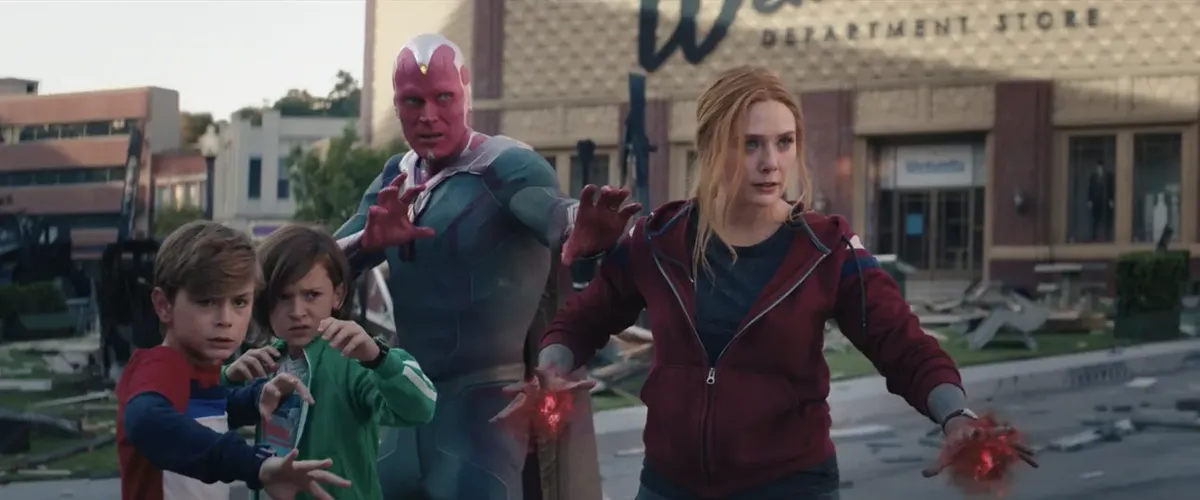
In Agatha All Along, following the events of Wandavision, one of the enslaved townspeople, Sharon, is manipulated into helping Agatha. When she accidentally perishes in the process, she is quite literally buried and forgotten for the rest of the show. She is a small consequence in the greater scheme of a magical journey for other protagonists—a blip in the narrative along with a few others.
Though each person is the protagonist of their own story, who has the power to deem themselves Agatha? Who are the people relegated to the role of Sharon, the random woman scammed into dying for the sake of another’s quest for power? On a Reddit post, someone asked why Sharon had to die, a commenter responded:
I really don't think [Agatha] thought that hard about it…She'll adapt to whatever happens, which may include one of the choices the other commenter's gave: kill her, throw her at the Salem seven to buy herself time, fly away and let whatever happens to Sharon happen.... saw someone else suggest erasing [Sharon’s] memory on another thread. I really think she didn't think about this at all and would do whatever popped into her head at the moment.
As OP says in the post quoted above: Rest In Peace to our wine drinking diva Sharon or Mrs.Hart, and her bag she bought from Talbots.
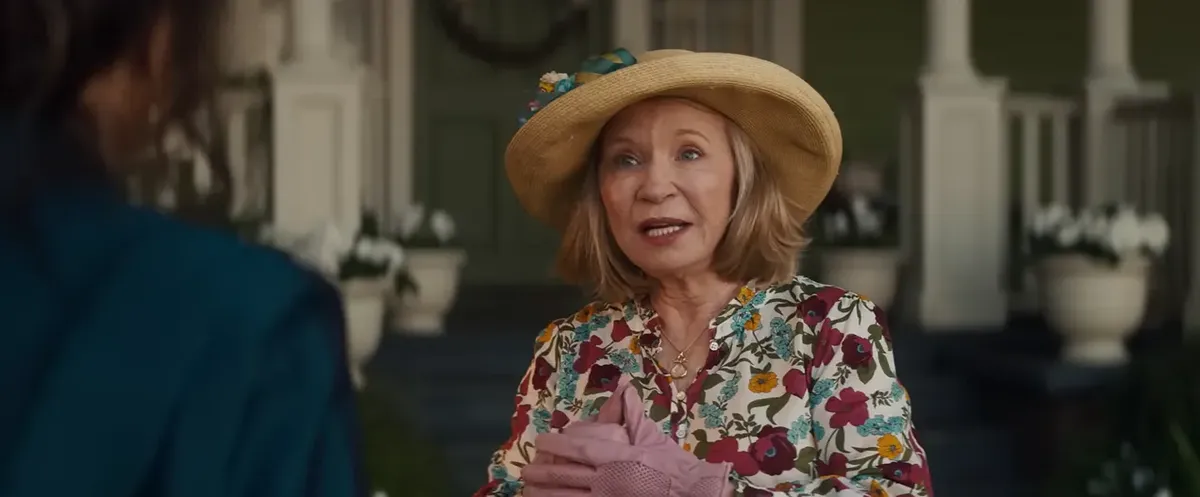
There is a level of callousness that comes with unnegotiated power. Beyond being disposable to Agatha, Sharon was also considered interchangeable. When her mind had been hijacked to be one of the many dolls in Scarlet Witch’s dollhouse, her name was Mrs. Hart, and no matter how many times Sharon corrects Agatha, she continues to call her by her imposed name (well isn’t that familiar in today’s political climate!) Neither Agatha nor Scarlet Witch has to think about the ripple effects of their actions as none of the consequences impact them in meaningful ways. Agatha’s absence of power is what drives the narrative of her show, and the cost of Agatha regaining her power is simply the deaths of those powerless enough to be manipulated by her. Nico’s absence of power is entirely self-imposed, and the cost is her own blood, her own physical and emotional torment at the hands of others, including her own ancestors, and unending moral distress in every action she has to take.
Indeed, people like Scarlet Witch, Agatha Harkness, Wiccan, and Doctor Strange among many others, each hold many levels of grief and trauma despite being in one of the most powerful subset of beings in this fictional world. Given the generally high stakes of the comic book universe, why would any of these witches and warlocks stop to consider what Nico Minoru is doing and why people like Nico have to hesitate before using their magic—why would they have to see the generations of ghosts haunting the source of Nico’s power. Even if they do, it’s not even a blip in their narratives—it’s wholly irrelevant. My point is not to compare trauma, of course—everyone has it, especially if you are borne in a comic book. My point is that we live in a hyper-individualistic society that does not have to meaningfully engage with the intersections of power. We are conditioned to fight tooth and nail for comfortability: what we go through for that power is irrelevant for those decide which doors are open for whom.
The limitations of our power are equally unimportant—why those limitations exist even more so. We are, at the end of the day, easily replaced in the greater narrative of another’s story, particularly if the other do not share worlds with us. Perhaps there is a further argument for the ways in which we all carry power—the friendship is magic, kumbaya, type of argument—but the reality is that it’s all arbitrary.
Yes, it’s all just fiction. I’m sure there are figures more tragic, more powerful in the vast repertoire of the comic book medium, and I simply chose a select collection of figures to discuss because these are the media I’ve consumed and it suits my narrative. Either way, as arbitrary as Nico’s character design is…so is everything else: the way we conceive of power, the way we decide who gets power, the way we decide who suffers for their power, etc.
I’ve never had a desire for power, but I do know what it feels like to feel powerless. It is a strange dichotomy that does not seem to exist on the same plane. One of the limitations of comfort—of inhabited privileges that pull the wool over one’s eyes—is that you forget the forms power and powerlessness can take. At first glance, it felt tragic to see Nico to slowly give up her staff. It felt like injustice, that she’d have to give up magic altogether when others didn’t have to. At the same time, magic never served her in the ways that it has served others, and though her story remains incomplete, I want to imagine her at peace above all. And it’s hard to imagine peace when one is constantly suffering for a legacy thrust upon them.
Truthfully, she’s a strange figure in the Marvel universe—someone that I’m not sure the franchise really knows what to do with. Similarly, there are figures in my life that I don’t know what to do with either—individuals who tire of negotiating and double down on the pain, or individuals who seek to make that pact with the devil to minimize the pain and expand their power at the expense of others. There are those who assimilate and those who become black holes, taking all of us with them despite being less than a blip to the Scarlet Witches of the world. In every effort for justice, everything seems to end in three possible outcomes: you resist, you assimilate, or you leave. Our institutions seem to beg us to resist, as if to say, “Try…let’s see how long can you withstand the pain.”
When we don’t see the processes of pain in our bids to power—when we don’t see what power can be, and how power can transform—I think many of us are left feeling alone in the struggle. Of course, that is purposeful, whether willful or not. When we fixate on the pain, the creativity of our incantations are stymied—we are told then to expand our tolerance for pain, to be more prepared, to do better, work harder, be stronger. When we fixate on the pain, we forget we can create worlds that offer power without sacrifice.
For nearly all of Nico’s existence, her magic has only ever been used to survive. Alongside her cobbled-together found family, there has never been many chances for her to thrive. When I imagine what thriving could look like for Nico, it isn’t to be a more powerful spell-caster than Doctor Strange, or even to be able to wield her own magic without pain. (In my opinion, power should come with pain—it should never be unrestrained, because there is always a cost, even when we can’t see it in the moment.) As I said, I want peace for Nico, a level of security that magic can’t grant her. Perhaps it’s finishing school, or it’s reuniting with her ragtag family. Finding herself, perhaps, beyond her identity as a witch.
What would it mean to give up on magic altogether, and…I don’t know, play softball? I’m sure there’s fan fiction out there with answers. Or, would giving up magic simply be to worry about being utterly consumed by those more powerful?
I wonder what that could look like for us when we stop waiting for institutions to do the right thing. When we stop grinding our own gears to keep a broken system running—what does that look like? And in imagining a world where we no longer have to negotiate our power, how, I wonder, do we make sure we don’t become Scarlet Witch or Agatha Harkness in the process? How do we stop ourselves, in fearing immolation by those more powerful, from allowing our rage to set others on fire first?
I’ve been going back and forth, I know. Perhaps I’m putting too much stock in a fictional teenage goth to help me make sense of the my own struggles between power and pain. In truth, there is much in my power that I feel guilty for not doing. There are moments where I’m so afraid of bleeding that I never summon the Staff. I am vigilant of myself, wary of myself on the days I enact my power to hide. And yes, there are days where I am resentful that I can’t hide without suffering that guilt while others do it as effortlessly as every other Marvel magician’s ability to use magic.
The Queen of Limbo
There’s one more character I feel worth mentioning: Magik (Ilyana Rasputin). She is one of my favourites for no reason other than my envy of her power—and it is a hell of a power (yikes!) that definitely comes at a heavy, emotional cost that she carries like a scar. Magik is a X-men mutant with the ability to teleport across dimensions and time travel. Most famously, she can create portals into Limbo, Marvel’s version of hell. Labeled by one article as a “far more terrifying magical menace than Scarlet Witch,” Magik is a queer (possibly pan, possibly ace) icon strangely sidelined by the franchise (except for one terrible movie where she is played by Anna Taylor Joy). Fun fact: Ilyana appears alongside Nico in Marvel’s Midnight Suns, a vastly underrated video game with a very fun cast.
As a child, Magik was lured into Limbo by its overlord and subjugated to many things that eventually grew her power enough to eventually destroy her abusers and become the queen of Hell. Like the Scarlet Witch, her magic comes from being a mutant, thus she can wield and grow it freely…sometimes callously and without care of consequences. Despite what it had cost Ilyana, the thing I envy most is the power to disappear into Limbo whenever she wishes. There is unspeakable power in the ability to simply check out, even if the place you exit into is an empty hellscape—what I would give for that just to catch my breath. There is power in isolation, to step between worlds and not worry about the ripple effects of your footprints along the way. There is power in the privilege to process, to be able to feel and to cry without prying eyes, to exit reality when it gets too heavy, to just BE. Her big sword is pretty cool too, but to return from the romance of such privileges, real violence tends not to be so overt—it is more often the absence, the silence, the callousness, that wear away at us, eating its unintended victims from the inside out.
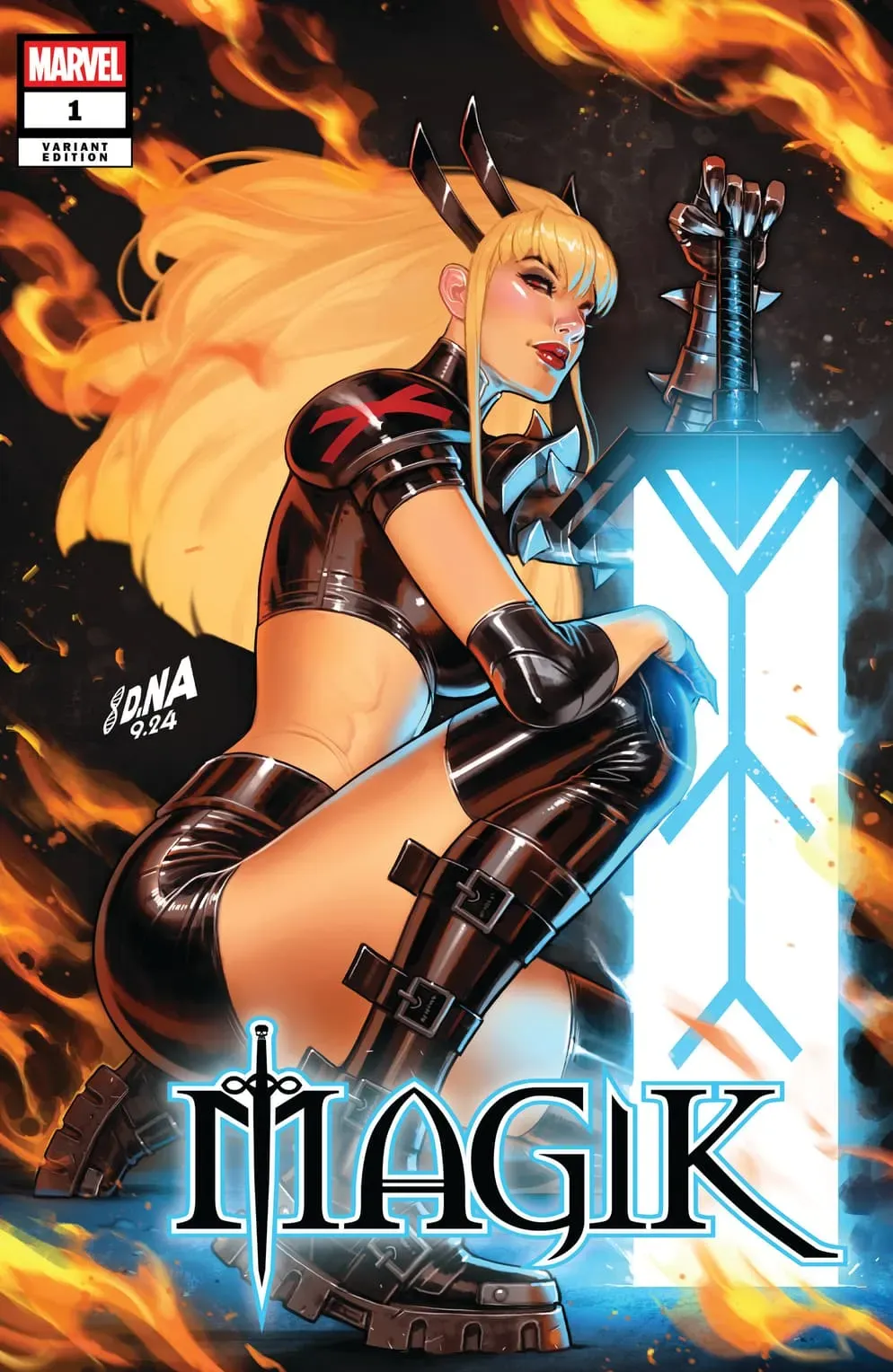
Despite the many displays of power, there is something tragically solitary about the witches I’ve talked about so far: Magik, Scarlet Witch, and Agatha (plus Doctor Strange to some extent) have gone through extraordinarily lonely journeys through their pain. Nico’s costs are felt in the moment, but from the beginning she has been in community with others. While it is also true that she’s had her own solitary journeys and a tumultuous relationship with her community, she has always held herself accountable to them. The more powerful witches and sorcerers feel far more abstract, more undefined without their freely wielded powers.
I think of Magik toward the end of this essay because I wonder what her power has cost her each time she uses it—when she hides, does she feel guilt? Does the power she holds erode who she is? Who would she be without it? I wonder if the more she enacts her power, the harder it is for her to differentiate between realities—the more realities tend to blend with her will, perhaps. For someone who has both sustained and caused so much pain despite her immense abilities and her good intentions, how does she negotiate power? And when one holds as much power as she does, can she negotiate with it? Or does it just feel so good, having come so far, that it’s impossible to imagine anything else?
In a recent conversation with my father, there was a sense of resignation to the way power works in this world. Having struggled in Turtle Island for the last half of his life, he implied heavily that we live in a white man’s world—that colonialism is the prize for the global victors. Sensing his frustration and for reasons too innumerable to discuss here, I did not engage further on this. In thinking of this sentiment some more, however, I can’t help but think about all the ways these so-called victors have created systems that don’t serve themselves either—denying others power, after all, does not equate to fairly distributing it even among themselves. Even within the metaphor of Marvel mages, the cost of power has been great: neither Scarlet Witch nor Agatha Harkness survives their quest for power, Doctor Strange’s entire existence becomes tethered to his power, and Magik is, as far as I know, never given the space to process. In what circumstances could we imagine them simply play softball? As much as it breaks my heart to hear my father say these things, this idea that there are victors and victims is one of many binaries that permeate the mythologies of our society. Like all binaries, they work best when smashed into spectrums, and I can’t help but wonder where I am on this ever-fluctuating negotiation of power vs. powerlessness.
I wonder whether my desire for Limbo is anchored in my own fears and hesitations about power. I feel torn in several directions: a part of me desires Magik’s power, a part of me roots for Nico’s willpower to never summon the Staff again, and a part of me wants to shake anyone who possesses any ounce of magic because even in a fictional universe where magic exists in so many forms, there are many more, like Sharon/Mrs. Hart, who possess no power at all in the most overt sense. A part of me despises the hesitation, and a part of me simply wants to rest.
At the end of the day, who exactly benefits from the tyranny of such anxieties?
A Spark of Divine Power
I wanted to end this essay with a tarot card. I am by no means an expert, but in moments of uncertainty such as these, I find periodic comfort in tarot to help me find the poem I need for the moment. For me, it is not about the future, but the push I need to move into the future when I feel blinded by all that is in the present. As I’ve discussed so much magic in this essay, here is a little mote of magic as a souvenir—to you, who has followed my meandering until this point.
For this essay, I shuffled my deck and pulled The Chariot.
from The Wild Unknown tarot deck
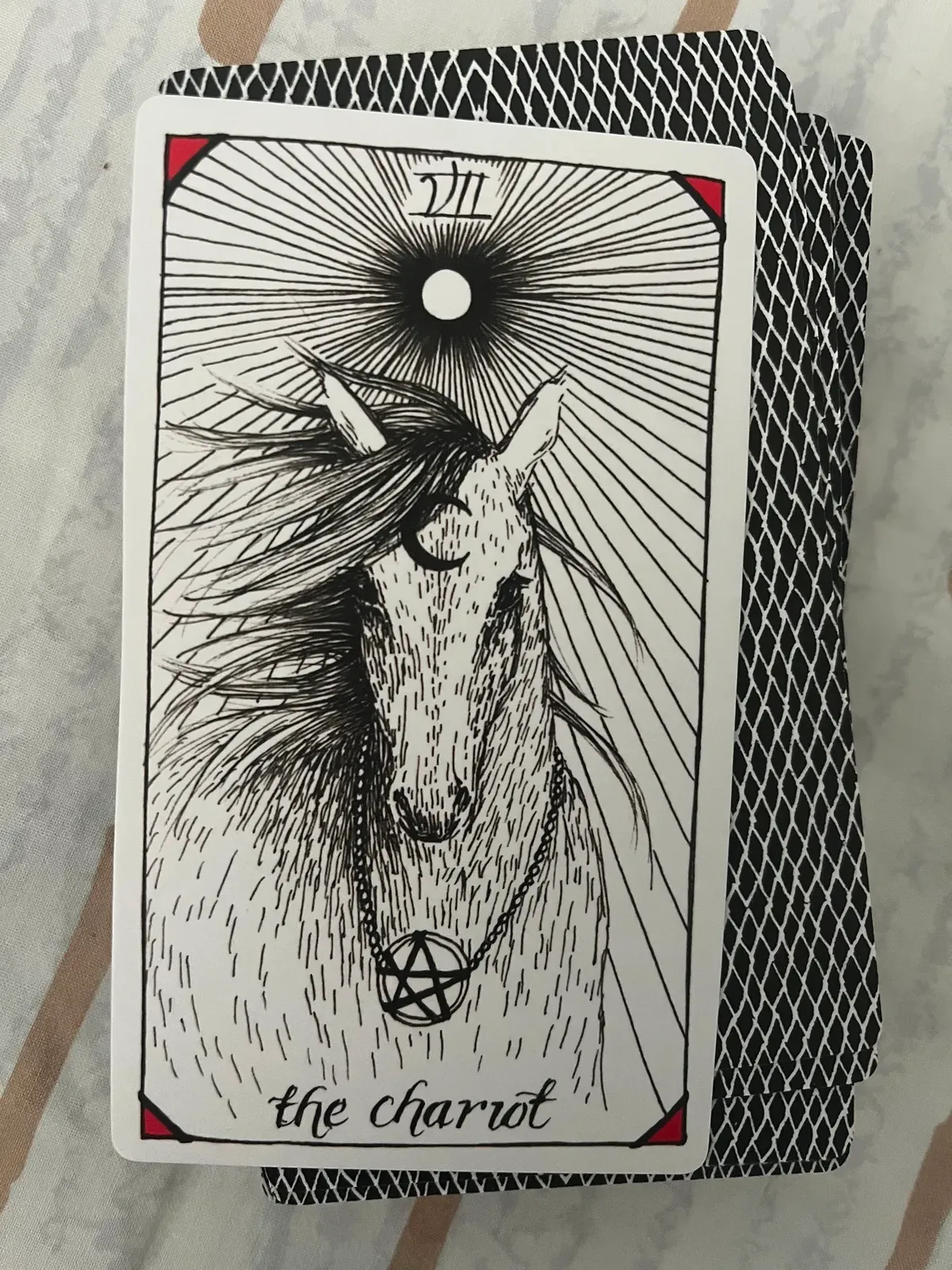
As a card in the major arcana, it signifies something much more deeply rooted in our vast inner worlds. The Chariot is about triumph and achievement, and being able to feel so securely in yourself as a warrior that you know just where the horses will take you.
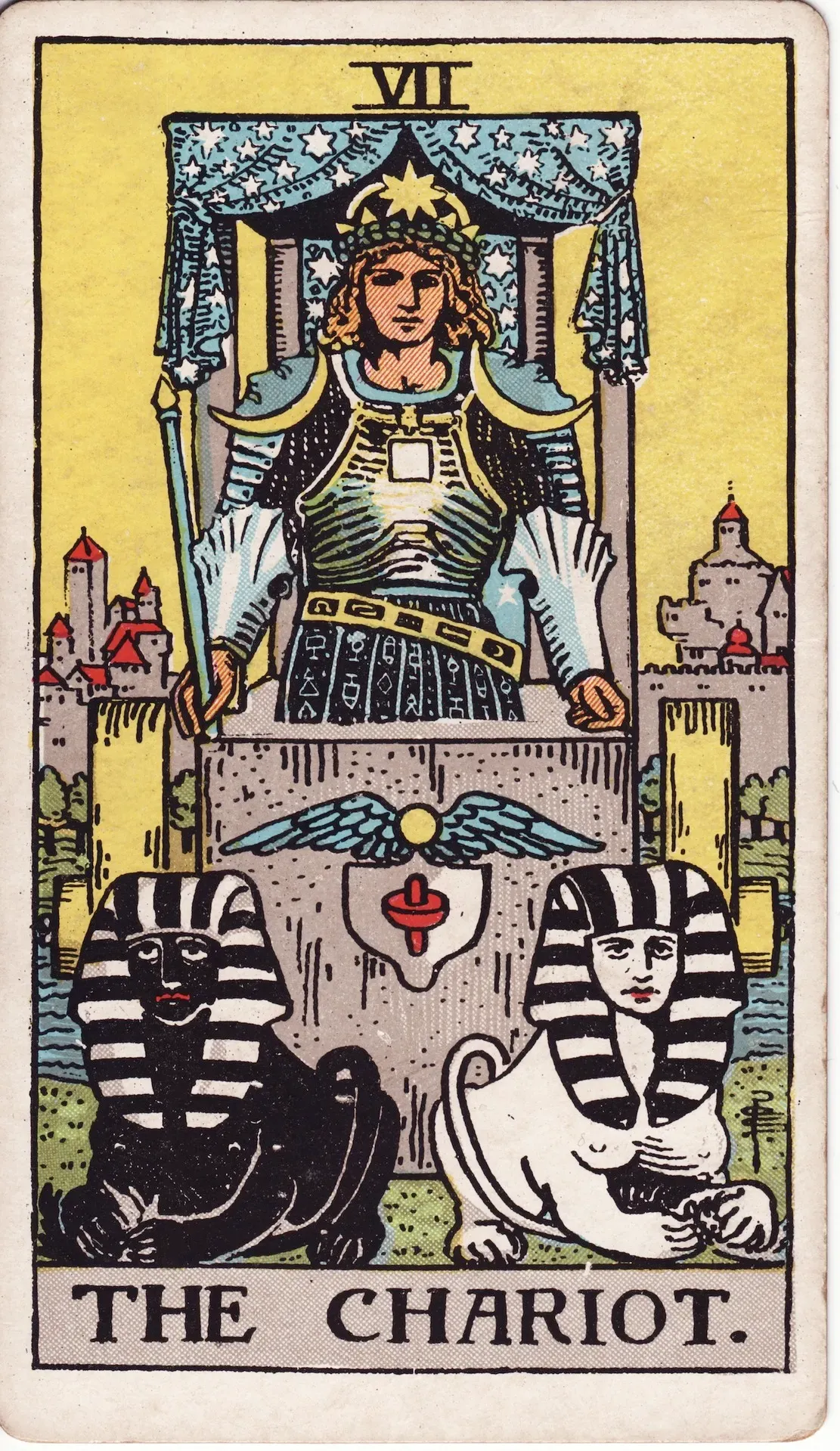
In the Rider-Waite version, the charioteer holds a wand, harkening back to The Magician, who represents total self-empowerment and having all the resources at your disposal to take action—action, being The Magician’s main consideration, rather than hesitation, consideration, and consequence. The charioteer takes inspiration from the Magician to find his way, even as the dual sphinxes below pull him in different directions. I find the sphinxes deeply discomforting, but I did not want to ignore the racist and orientalist depictions of yin and yang. A more decolonialized interpretation of The Chariot is to perhaps reframe power as action. Rather, there is a world in which real power is perhaps empowering the sphinxes to dethrone the charioteer, throw away the crown and wand, and instead let the spectrums of inner dualities restore balance in ourselves at world’s end.
I wondered if I would pull The Magician for an essay on magicians, but perhaps The Chariot is even more appropriate. Where The Magician is not thinking of consequences in their self-empowerment, The Chariot rides the tension of pain and power beautifully.
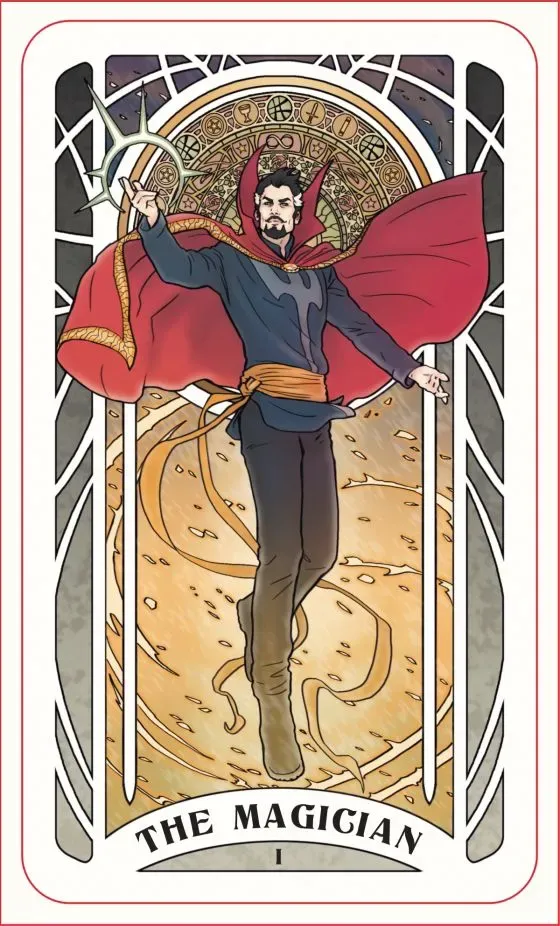
Bonus Mini Rabbit Hole: The Marvel Tarot
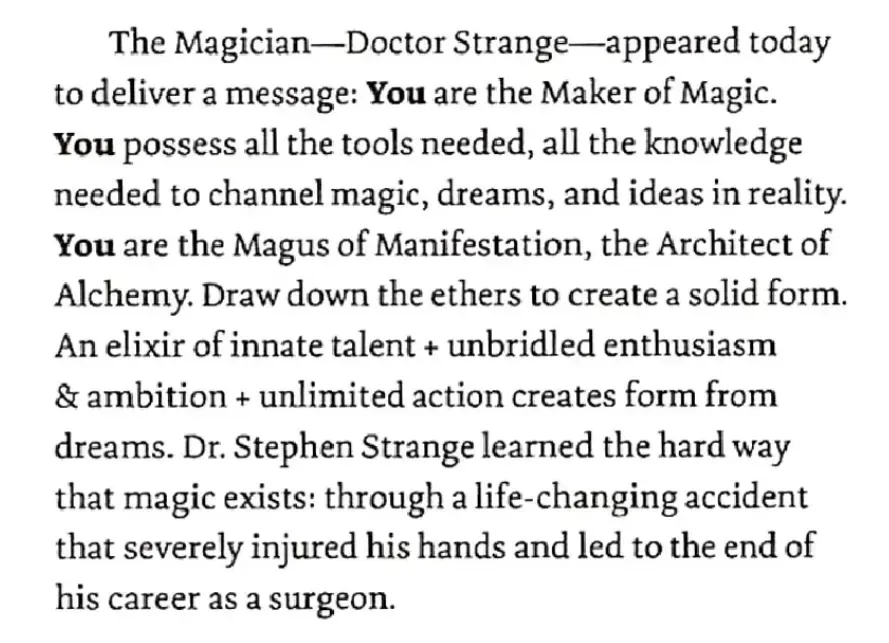
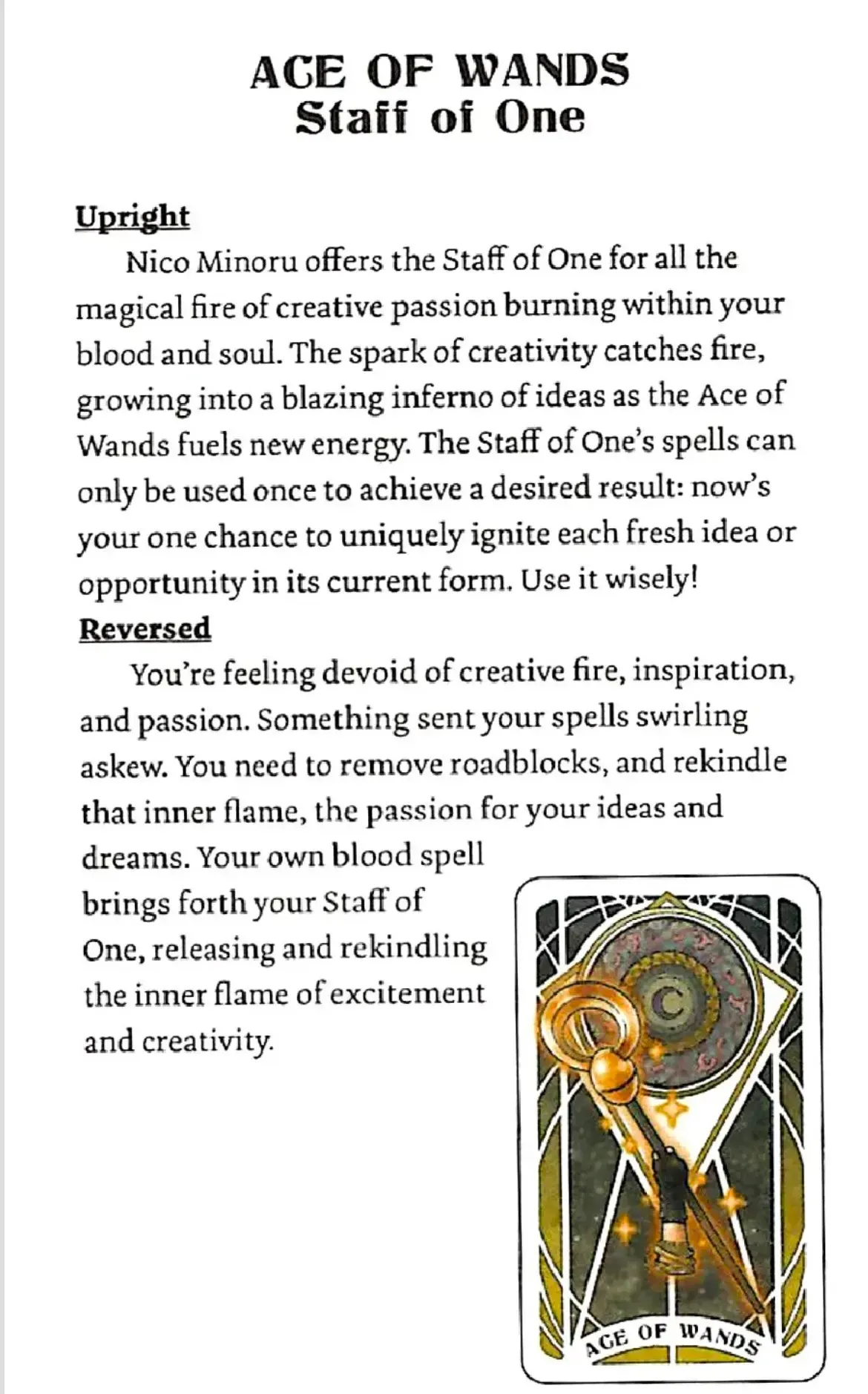
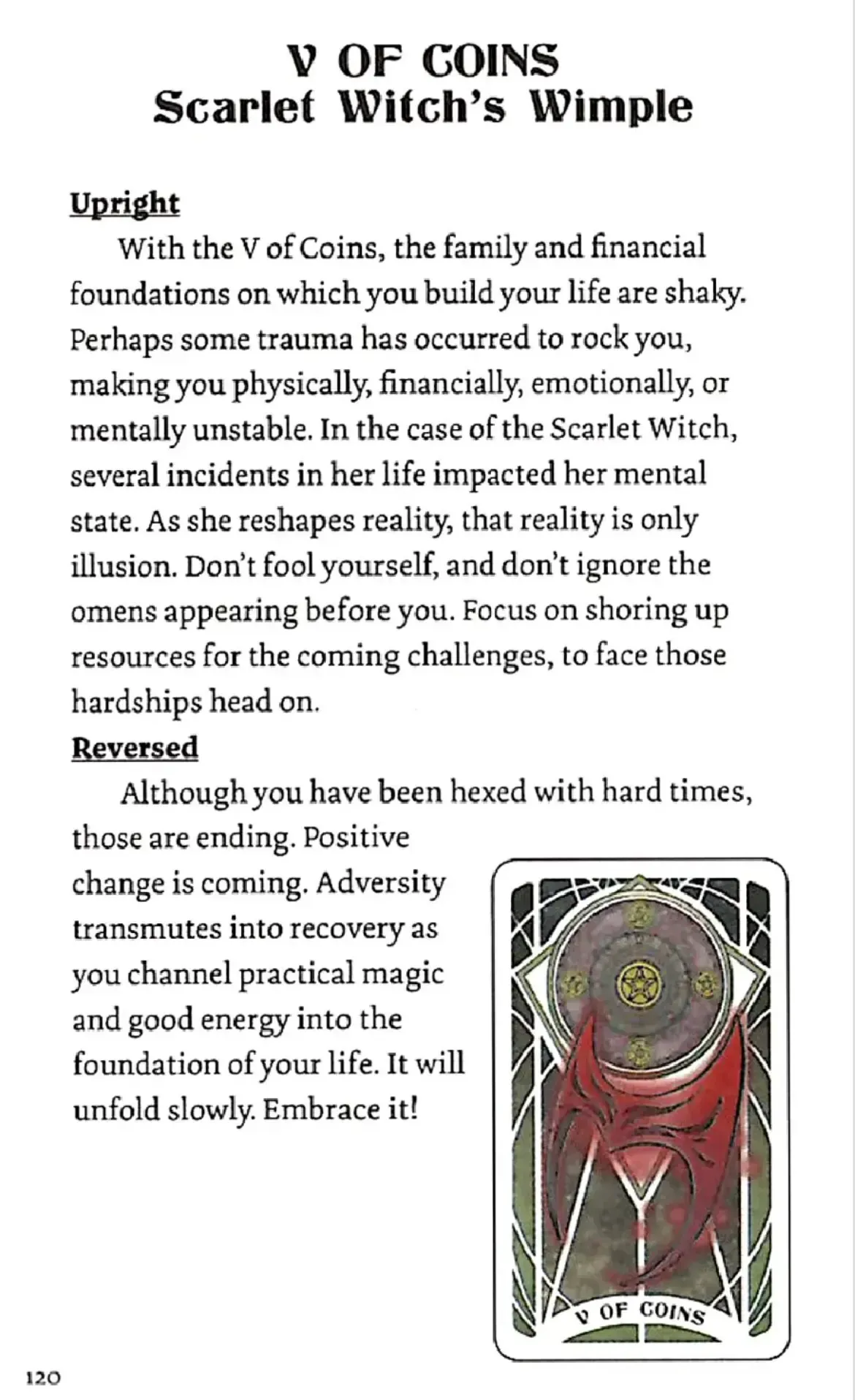
Out of curiosity, I wondered whether there was a Marvel tarot set—there simply had to be! And I wondered which characters represented what. Unsurprisingly, the connections are incredibly straightforward. It feels neither like it was written by lovers of Marvel nor lovers of tarot—alas, the tragedy of capitalism. Art is cool though.