Lord of the Rings and the Myths of White Masculinity
Personal notes on gender failures and reimagined potentialities
This is an archived post from Substack posted on May 31, 2025
I love women. That is no secret.
In the way that many surround themselves with femme-identifying folks, there is a security in femininity that may only be explained by its absence of masculinity. Having grown up in a majority-femme household with majority-femme friends, masculinity was something that offered mostly anger, frustration, and—admittedly—envy. There is a sense of callousness to the way I saw men behave that I envied—a lack of perfectionism that gave them access to things I could only dream of, something I felt all the more in my teaching career, when I was constantly asked to perform cis-white-male every morning and came up short each time. For a long time, I held a lot of anger for men for seeming to possess the things I felt owed, a familiar refrain in a world driven by false scarcity.
A few years ago, during my time working graveyards, I decided to read A Will to Change by bell hooks. It was a formative book for taking the time to understand and critically engage with masculinity, and though I read this while newly pondering my relationship with my father at a distance, it opened a door for me in shifting perspectives on why so many seemed to struggle with the men in their lives. Including men and other male-identifying folx. In many ways, I feel like my queerness has saved me, but this was not one of them: by willfully excluding men from my life because I seldom desired them, I wore the world of femininity like an itchy sweater, three sizes too small. I never gave myself the chance to examine the parts of masculinity that has been bestowed upon me: as an eldest sibling, as a protector, as one who never seems to live up to the strength expected of me.
More than that, I began to see what it means to fail at both masculinity and femininity, a feeling I think many can relate to.
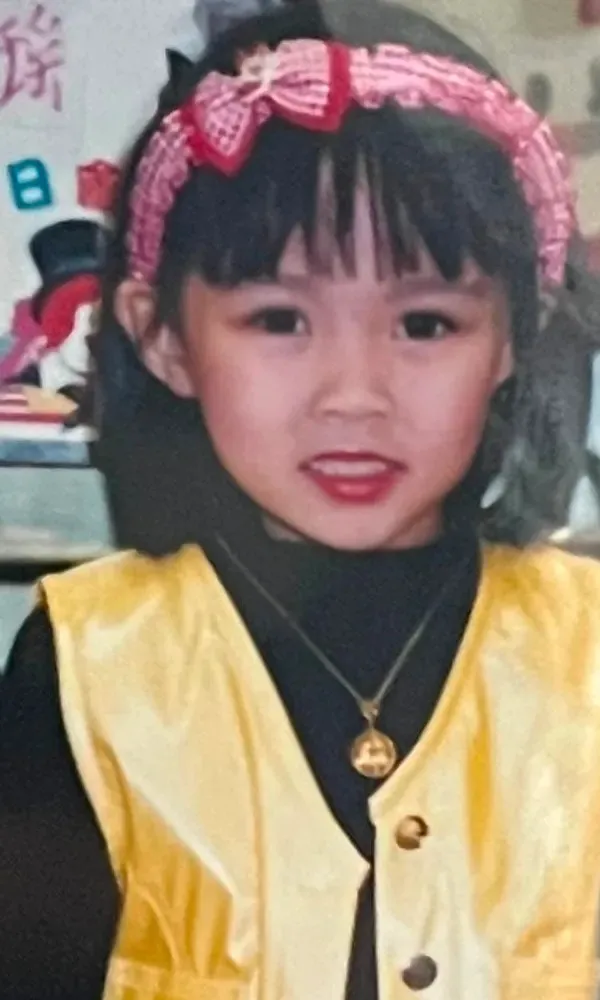
The truth is, I’ve always loved being a girl for the access to deep emotional spaces. I love being soft, and I’ve learned to embrace my sensitivity. These things felt to me as exclusive to girlhood. Yet, there is pain in girlhood too: a memory of being in a change room and wanting to cry, a memory of being in dresses and wearing makeup and feeling like I was doing drag against my will, a memory of realizing I could never be the perfect princess my mother wanted.
A while back, my friend H and I dreamed about what we would’ve worn to prom if we’d been brave enough to be our full selves when we were eighteen, and I sent her this suite of Supremme de Luxe’s suits.
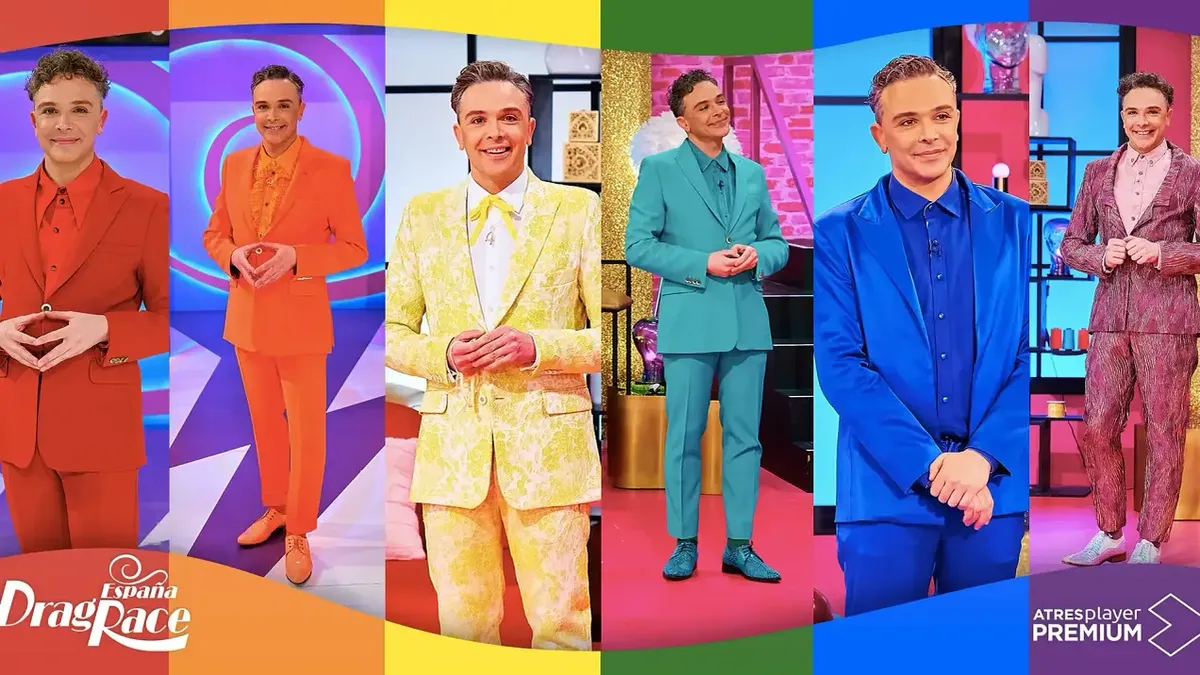
I loved reimagining prom, because I still remember how much I hated seeing myself in that purple dress. Perhaps I was waiting for that moment girls have when they finally feel beautiful…Hollywood is such a scam in the way beauty is distilled into small, digestible archetypes. In retrospect, of course, my eighteen-year-old self could never have imagined the possibilities of words like suave, handsome, or even cute, a word I’d deemed almost frivolous because I could not imagine its potential beyond a consolation prize.
In my mind, the spectrum of girlhood is so wide that I could slot myself in and feel okay, even if community was scarce and the box around me were a few inches too snug. The word woman feels harder, and it brings back memories of trying to “fit” and what that means for attractiveness. The expectations don’t feel clear aside from the frustration of being awkwardly lumped into “women and children” rhetoric and being utterly dispossessed of yourself in a way that fits the mold of what it means to live in a cis-het-white patriarchal society. After all, despite my estrangement with the word, tomboys are supposed to grow up.
Navigating Access
I now realize the things I love about girlhood aren’t gendered. In many ways, I experienced boyhood too, but because I was soft, I never thought I was masculine. This feeling of in-betweenness is something I continue to carry in many ways, and it is a constant negotiation of access, of feeling like I have to push boundaries to put myself in spaces, even when the borders don’t exist and no one is interested in policing me except myself.
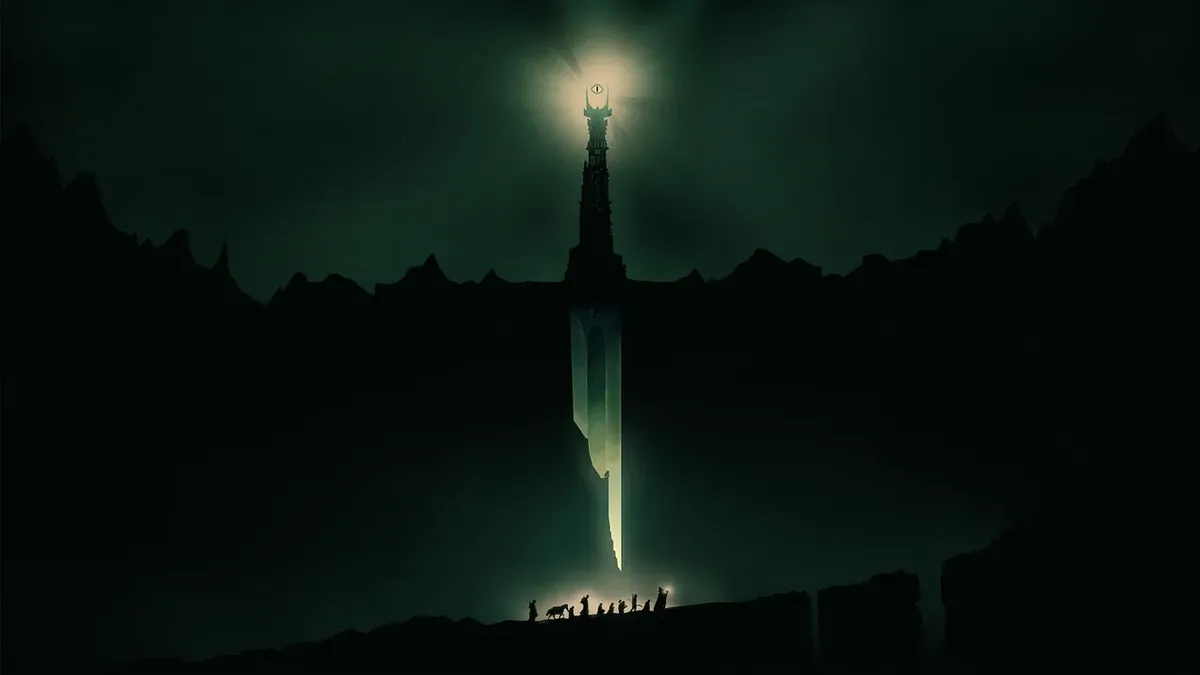
One of those things I particularly struggled with was high fantasy and science fiction (ironic considering its infinite potential for liberating narratives): Lord of the Rings in particular felt difficult to access in a way I cannot fully explain. It’s funny because my hyper-feminine mom and I have watched every action movie franchise we could think of—partially because action movies tend to be easier to understand across language barriers, and partially because we’ve both enjoyed bonding over them across the years—yet there is something about the quintessential fandom of Lord of the Rings. Even before consuming them, I understood that those spaces, almost sacred in the ways that this franchise is revered, are not meant for me nor could they be. As I hadn’t received any semblance of an invitation to participate, I stayed away.
Admittedly, being that person with a literature degree who hates Lord of the Rings kind of became an annoyingly edgy personality trait, especially having had no memories of the first three movies upon my first viewing a decade ago. So, when friends who are big fans of the franchise invited me to give it another chance, I did.
In the way that Lord of the Rings have paved a meandering way for innumerable big-titty JRPG fantasies, it’s a very masculine experience that has shaken the cultural landscape in ways that are difficult to fully capture. Arguably, the three stock female characters walked so Camilla from Fire Emblem could run (I think I’m kidding, but…let’s be real). Rewatching the three movies over the last year gave me a new appreciation for the different archetypes of masculinity, specifically white masculinity, that feels timely in a sociocultural landscape that is actively weaponizing idealized masculinity against folx of all genders. There seems to be increasingly egregious, yet desperate attempts at maintaining the status quo of the binary while actively harming both extremes. In “The Incoherent Sexual Politics of the Right,” podcaster Matt Bernstein and his guests, Moira Donegan and Adrian Daub, talk about the ways that women vie for protective power by appealing to the conservative rhetoric of powerful men, often targeting specifically the trans community (and very shallow, projected caricatures of the trans community) and the reproductive rights movement, even when it seems to be against their interests. In exploring the case of Ashley St. Clair, who sought to cash in with the most famous tech grifter of our era, Bernstein explores the way such allegiances seldom pay off. Instead, said grifters reap the benefits of status and wealth while peddling impossible, contradicting standards of masculinity that capitalize on the anxieties of young men. There are no rewards for those beneath the top rungs of ladder, yet the illusion is there—you just have to bury every one else to approach the ever-shifting goal post.
In the truest spirit of our hyper-individualistic, colonial, capitalistic systems: nobody wins. There is incredible beauty to the liberation of the self from gender, a cascading series of unshackling of so many expectations that do not serve us as individuals or as a collective. Understandably, such an extent of liberation threatens all systems that exist, and it is no surprise to see gender under attack to obfuscate the real harms in place. In fact, adrienne maree brown recognizes the internalization of patriarchy as a disorder1, particularly when masculinity comes with exemptions to labour yet access to power, as it so often does.
Perhaps liberation would be clearer if we had a clearer picture of white masculine ideals and its guiding principles. Let’s take a look at some of these through the roster of Tolkien’s various white men.
A Quick Run-through of the Boys in the Band
Disclaimer: this analysis is based on a single viewing of the trilogy over the course of a year. Though that is admittedly rather poor practice, the emphasis of this post is on my interpretation of masculinity from the position of a queer, racialized, gender-nonconforming woman…everything that this franchise does not exactly represent. That said, sorry in advance if I miss important details!
Frodo & Sam
Perhaps the best place to start in Lord of the Ring’s sample platter of masculinity is in our heroes. The word "burden” is aptly applied to the Ring and the singular journey it represents. While there is an understanding that no quest can be completed without a party—a community—by the side of the protagonist, there is also an implication that at its core, the burden falls on a singular martyr. The juxtaposition between Frodo and Sam is the difference between carrying the burden through internalizing the pain of harbouring such a quest alone and having the emotional capacity to share burden and care. Despite the dressings of the movie, I view Frodo as a uniquely selfish character among a cast of men with many great destinies. One could argue that the effect of the Ring is what drove that selfishness—the enticement for power—but his oblivion to those around him, Sam in particular, and the tunnel vision in which he must accomplish his task, is steeped in the type of masculinity that has exacerbated the so-called loneliness epidemic among men. In other words, Frodo represents the way men are taught to suffer silently, alone and apart even among friends, in order to accomplish big things—whether that is chasing success or saving a realm from a great evil, one must view others around them as a means to an end. One must suffer alone because even those who help you will only do so to tear you down. Even if they are as noble as they come, the power is too tempting. Just ask Boromir.
On the other hand, Sam is a constant throughout this journey, yet only viewed as a loyal companion and a prop to Frodo’s larger journey. Their arcs are tiered and Sam is framed to be secondary because his only goal is to support Frodo—a task less noble than the greater one that Frodo undertakes to destroy the Ring. As two characters with much homoeroticism attached to them over the years, I wonder if such a pairing would be equally enticing if Sam’s expression of masculinity—his gentleness, his loyalty, and his going above and beyond to help Frodo succeed—were not qualities in traditionally feminine domains. This is, of course, likely not Tolkien’s intention, but Sam’s softness is one that is not particularly common in media today. Another interpretation is that he is an ideal of a loyal servant, providing a picturesque ideal of a man who knows his place in the colonial, class-driven order of the world. In a divided society without clear markers of such hierarchies (despite growing disparities each year), boys and men seem to be encouraged to be Frodos and not Sams—it’s emasculating to devote oneself to the service of another man. After all, who should we live for if not ourselves?
Merry & Pippin
Merry and Pippin provide an interesting foil to Sam and Frodo. To me, they illustrate an interesting contrast between boyhood and masculine ideals. The strength of their relationship, their curiosity, and the goofy, naive, and wholesome way that they interact with their worlds are deeply infantilized by the overarching story. They are two men who come across as asexual and childlike, yet show up for their communities in significant ways. Where Sam, loyal, protective, and worthy of his dream of becoming a father and a husband, Merry and Pippin are sequestered in boyhood and are never taken seriously despite their best efforts.
Aragorn
Conversely, the most idealized vision of masculinity is captured in Aragorn. Under the divine right to rule, he represents the endless bounty of fulfilling one’s destiny—unlike the grotesque and wicked false kings who are unworthy of such bounties. In many ways, Aragorn simultaneously embodies the myth of meritocracy, the carrot that many men feel owed at the end of the stick. His divine right sets him on a journey to lead, to show kindness, wisdom, and humility until a certain point, where he is rewarded with power, prestige, wealth, and a silent, subservient woman whose sole purpose of existence is to sacrifice for him and love him.
In an age where the road to anywhere is so murky, capitalism doubles down on the carrot dangled in front of those who feel owed. Even as the carrot slowly disappears, the blame is shifted to other bodies—refugees, immigrants, trans people, women, etc.—rather than those who have gaslit us and stolen the carrot. In other words, everyone is made to feel like they are Aragorn, lost without his crown, yet the journey toward it is no longer clear. Instead, Arwen has learned to speak, and the Age of Men is polluted by DEI and the audacious coexistence of everyone who does not fit the mold of man.
[June 27th Addendum] It's interesting to note that Aragorn does not embody typically "toxic" masculinity, and instead bears a certain level of dignity and grace that is often ascribed to a noble working class man. He is, perhaps, an every man. A regular ranger, roaming the Middle Earth, learning to be, learning how to make mistakes, be accountable, and live up to the expectation of others. Paradoxically idealized and perhaps commonly inhabited to different degrees. In the spirit of bell hooks' The Will to Change, he is a good man in the way that many men can be good, has the potential to be good, and perhaps would be good under different circumstances, with a different set of expectations foisted onto him.
Gandalf
There were many moments in my viewing where I felt like Gandalf was the source of many problems as someone who supposedly wields power, yet holds it close to his chest. He is a mentor and a guide, and perhaps it is best practice to lead students to the answer rather than solve the puzzle for them. Given the stakes of this franchise, however, I wasn’t sure what he was trying to impart. Perhaps he is like the Wizard of Oz, masquerading as someone in power to hide his ineptitude.
To me, Gandalf represents the overarching concept of expectation that appear as suddenly as he often comes and goes, without a real roadmap on how to get there and what’s waiting for us at the end. He is the experience of gender where you suddenly realize at some point in your life that you can’t play in the dirt because you are a girl, or you can’t play with dolls because you were a boy. You must now go on a journey to discover how to fit into your assigned gender, even though everyone knows that you never really stop thinking about the dirt or the dolls. Just as Gandalf sets the hobbits on their quest, there is undeniably a small part of them—particularly those who did not choose this journey in the first place—that wonders what it would’ve been like to stay in the Shire—to have stayed in that childhood wonder where nothing felt wrong.
[June 27th Addendum] I was recently listening to a podcast interviewing Ada Palmer, author of Inventing the Renaissance, in which she describes Leonardo Di Vinci--along with many intellectuals and creatives in his era--as a saboteur of human progress. She describes this class of saboteurs as men who wanted the honour and prestige of creating something one of a kind, not to be a part of the evolution of culture, technology, and understanding, but to fulfil some kind of legacy. They wanted their creations to be so unique that no one can replicate it, perhaps an early version of the way intellectual property is often gatekept today, but with their notes set on fire rather than vaulted behind arbitrary law. Gandalf reminds me of this type of manufactured scarcity, this counter-symbiotic gatekeeping of power that could have made everyone's lives easier, but are withheld for whatever reason. All roads lead back to capitalism and class warfare, I suppose.
The Manifestation of White Masculinity in Queer, Non-White Bodies
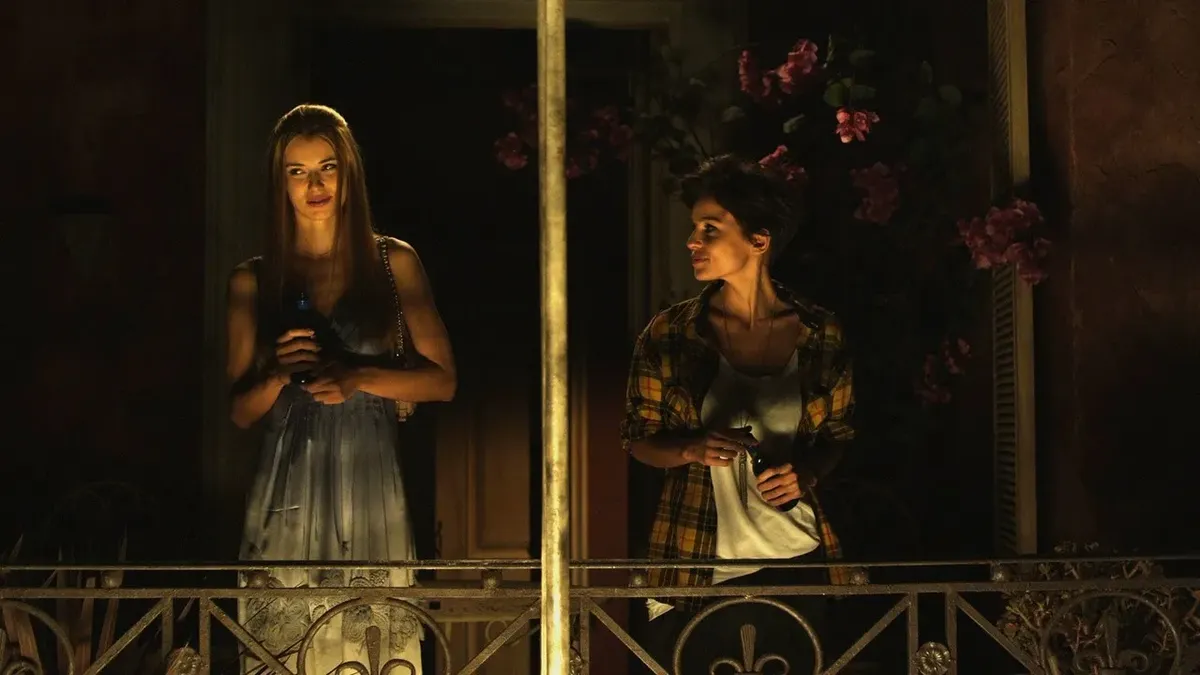
Recently, I watched a movie called A Room in Rome, and it was one of the most atrocious scripts I’ve seen in a long while—and I had the misfortune of watching the entirety of Emilia Perez. In my Letterboxd review, I compared it to the legendary and unironically terrible movie, The Room, but worse considering the strange racist and homophobic undertones. At the same time, there is something morbidly curious about the way the more “butch” character is portrayed, particularly when examined through the lens of this film’s straight, white director and screenwriter. Alba has an inexplicable attraction to Natasha that manifests in a series of bids for intimacy that can only be described as manipulative at best and aggressive at worst. There is a level of entitlement and possessiveness of Natasha’s agency that I found difficult to watch, yet recognized in many straight, cis, male protagonists. While Natasha isn’t perfect by any stretch of the imagination, it is fascinating to witness the way gender becomes warped through funhouse mirrors through the white, male imagination. I feel similarly to movies like Poor Things, anything by Wes Anderson, and the endless litany of white, male directors and screenwriters who feel entitled to our stories. Symbolically annihilated by the narrow lens of white masculinity, Alba and Natasha’s story can’t capture the nuances of queer desire without falling into the rigidity of the binary.
In a similar way that white masculinity infiltrates queer stories (in particular the stories of queer women), we can also see evidence of its toxic runoff into non-white stories. While this is no doubt an entire dissertation unto itself, I’d like to touch on the example of Akira (1988). In Kenta Kato’s exploration of early, queer Japanese cinema, they discuss gender non-conformity as a product of Americanism and the post-War emasculation of Japanese men. There are echoes of this fragile sentiment across many pieces of media that I’ve consumed2, but for the sake of brevity, Akira presents an interesting case study that mirrors the white masculinity represented by the men of Lord of the Rings.

To contextualize my argument a little, it’s important to note that Akira is one of the most visually stunning films to exist—and it holds up! It is often credited as an early entry into cyberpunk, inspiring a myriad of technological dystopia that have grown out of the gritty, fluorescent world of Neo-Tokyo. From an era of uncertainty, we spring into extrapolations of our own fractured futurities. The film is also a short introduction to the overarching story of the six-volume manga, which I haven’t consumed.
Stay tuned for spoilers of this 40-year-old film.
Where Lord of the Rings conveyed a set of expectations represented by Gandalf and promises of bounty represented by Aragorn, the boys of Akira have no guide and little promises of what could be. Kaneda and his crew ride their bikes through a city choked by corruption, with little specific purpose except keeping each other safe and messing with the rival gangs. There is so much ennui that women are simply props in a world of vice, temptations so easily accessible and so disposable that they aren’t even considered rewards. Even Kei, whose aloofness attracts Kaneda to her, is a revolutionary bound to the whims of others, acting often as a medium and prop for the men around her. While Kaneda is ostensibly the hero of the story, he is secondary to the journey of Tetsuo, a member of his gang and a boy harbouring an immense inferiority complex growing up alongside Kaneda. Through a series of circumstances, Tetsuo gains incredible psychic powers that sets him on a rampage of death and destruction. The growth of his power is a personal burden portrayed as an almost nirvanic experience—an evolution to a dormant, final form.
The parallels to Lord of the Rings beg the question of how pervasive such narratives of masculinity are—is this masculinity as a whole or white masculinity threaded into what our cultures have become? Having grown up in a relatively (subtly) traditional Asian household, I can confidently say that the delineation between the two are murky. Years of colonialism and aspirations of self-colonization has a way of wearing away at one’s conception of identity, particularly masculinity in a shifting patriarchal landscape, one that would be unrecognizable even to our ancestors’ patriarchal pasts. The loss of purpose and power becomes not a catalyst to reinvent and to reconceive our identities post-colonialism, but to instead cling to familiarity and the promise of bounty under rescripted colonial ideals. From the opposite of ideal, such as in Tetsuo’s case, to the power to reshape a broken world into an alternatively broken world.
Interlude: making something out of nothing
The creator is trans by Billy Ray Belcourt (excerpt)3
the creator is trans
and the earth is a psychology experiment
to determine how quickly we mistake a body for anything
but a crime scene
the product of older crime scenes.
there is a heaven
and it is a place called gay.
gay as in let’s hold up a world together.
gay as in happy to make something out of nothing
and call it love or anything
that resembles a time
in which you don’t have to be those shitty versions of yourself
to become who you are now.
one day i will open up my body
to free all of the people i’ve caged inside me.
The truth is, I have been trying to write this essay for months. In the way that gender can take us down so many roads, I struggled to capture the fullness of my experience with gender, with femininity, masculinity and all that I am still unfolding inside me. The truth is, I have been in a constant state of war against my own body my whole life, and I don’t know if it’s the romance of girlhood or boyhood that has taught me to hate it—to apologize for it the way so many queer and femme folx do—that I should learn to make amends for it if I’m not invested in remaking it to appease the public eye. It is difficult to love something no one has taught you how to love.
Simply knowing all the ways we have been failed by the expectations of gender doesn’t fill the void of constant extraction—our labour in its infinite forms, our commodification in so many ways, and the way we conceive of our own value. In the way that Billy Ray Belcourt’s poetry frequently illustrates the ripple effects of extraction by the hands of colonialism, we learn to pick up in the places where colonialism has left off: extraction by our own practiced hands, until there is nothing else to give but the dregs of those we cage inside ourselves. I don’t know how to soothe the little boy in me who never got to grow, or the little girl who grew up too fast and learned to disappoint too early. Like the men in my life, these wounded ideals provide no guidance, no promises of rewards, no singular path that could heal the loneliness of the burdens we take on, and certainly no alternative to the fickleness of white masculinity. Instead, we get used to witnessing our own disposal over and over, and either we practice gathering our own pieces, or we let the rage consume us.
So many stories could’ve built up the shape of my argument, and yet I landed here in this moment, perhaps with more questions than I have answers. Realistically, this is an essay I could write for the rest of my life and still not fill the breadth of what these stories can say. There is no doubt great thinkers and writers who have meandered these same roads, wandering even deeper into the brush. Jack Haberstam and Judith Butler comes to mind in contrast to and alongside the stories I’ve not yet had the courage to consume: Billy Ray Belcourt, Kai Cheng Thom, Roxanne Gay, Sabrina Imbler, Michelle Zauner, Carmen Maria Machado, Fariha Roisin, Mimi Khuc, Saeed Teebi, Mohammed El-Kurd, Leanne Betasamosake-Simpson, and all the half-read, half-yearned for stories I’ve been putting off. Stories of racialized, queer pain in praxis; stories that could as easily rip a hole in me as it is to sew me back up.
Sometimes, I wonder how often we default to whiteness to avoid looking at the wounds we can’t fix.
Implications for Liberation
When I take a step back to marvel at the larger picture, bodies are such incredible, beautiful things. Innumerable moving parts working in tandem to bring you the wonders of life. There is immense satisfaction in service too—the movement of labour and care that is rooted at the core of being Empathetic Mutualist Humans, as Robin Wall Kimmerer puts it. Service that is freely given, received, and returned in whatever ways that nourish both parties. Service that is not, in fact, rooted in people pleasing and fear of being unable to earn—to commodify yourself for—the love, affection, and/or respect of the people around you.
I’ve been thinking a lot about the ways I’ve been socialized in my gender, the caretaking roles I take on, and the parts of me that rattle against vicious cycles of inadequacy. Much of this has come up since I had the privilege of meeting an incredible human who wants to spend time with me. It is unclear who or how I am supposed to be in order to earn more hours of their time, and I catch myself being haunted by the ticking bomb of manufactured time scarcity. There is absolutely nothing they have done to make me feel this way, yet the labour of working through my conceptions of reality can feel immense when we’re apart. I know, intellectually, it’s just old aches. After all, there are people in my life whom I love immensely, people whom I truly consider the best of us, yet find themselves stuck in the same cycles as me: unable to fathom how we could possibly earn the love of others by solely being ourselves.
Maybe that is part of womanhood…maybe that is part of manhood too.
Of course, gender is only one piece of the larger puzzle of expectation, but I think it upholds more systems than we know. There are times where I wish I could be less queer so I could learn the rules a bit better—or maybe less Asian, so queerness could be more straightforward. Yet the liberation of gender isn’t supposed to be straightforward. We can’t abolish gender binaries by upholding other binaries—we need space for nuance too. I think about trans folks, for example, and the liberation that can come with being in the right body, a body that doesn’t feel like an apology, a compromise, or a commodity.
E.R. Fightmaster talks about feeling masculine when they feel playful and allowing that feeling to protect the feminine, and I loved their ability to reimagine the spectrum of what these two words could mean. I haven’t figured out how I want to redefine them for myself yet. Perhaps, in thinking about my desire to enter mutualistic partnerships with my communities, it’s about harnessing the protective feminine and the gentle masculine. When I think about my rage and my sensitivity, I think of my femininity, and when I think about my humour and my groundedness, I think of the masculine. When I think about my struggles with both, I think about my capacity to hold multitudes and my compassion for the messy nuances of human existence.
Maybe the thing I desire the most is to be able to give myself permission to desire. Permission is a funny word, full of promises behind slatted doors. For as much as I love to imagine worlds, it’s a different practice entirely to imagine myself in them. To quote a friend who quoted Andor: “I burn my life for a sunrise that I know I’ll never see.” But what do you do when everything in your soul craves for a glimpse? Maybe you see the first rays of light everywhere you go. I have an image in my mind of a beautiful human against the backdrop of the setting sun as we walk amidst the lush green mountains, and an image of laughter among friends as we gather by the white light of the projector as we awaken our inner children for the night. It’s images like these in my life that make up the fractals of what that sunrise could be. Holding onto these images means disrupting the narratives we’ve inherited—after all, we can’t sustain ourselves until sunrise by masquerading as the sun and burning our lives away.
Wherever you are, whoever you are in this moment at this time, thank you for reimagining with me.
Stay soft, stay tough, stay in whatever feels right.
[Reflecting from the Future - June 27th, 2026]: I love the moments where writing feels like a time capsule. This past version of myself, waxing poetic over someone who would tear open my wounds and toss me to the side, while intellectualizing gender anxieties I'd forgotten I had. It has been over a year since I penned most of the words in this essay. I have debated many times, as I am archiving these old works, whether I could erase the person that drove me to finish this article, then sitting half-written for months, because I wanted to be understood. In the end, I think speaking to my past self is the best compromise. If I could, I'd tell my old self this: this person will make you will feel like you were expected to perform--whether it is gender or fear or other scripts you haven't practiced enough--and they will make you feel like every worst thing you've ever thought about yourself is/has always been/will always be true. And I know you will recognize whose voices those thoughts belong to, and I know you will do all the things you do to make yourself feel good enough again.
I write these words here because none of these feelings are gendered. The soft parts of ourselves are protected by bodies of all kinds. Self-compassion, self-reinvention: we are not unique in these desires, but under the banner of gender liberation, the possibilities of our malleable self can be tested to its limits. There is so, so much ahead to look forward to.
brown, a. m. (2023). Loving corrections. AK Press.↩
There are also many films that counter these arguments or highlights the integration of white masculinity in unique and interesting ways, particularly across different cultures. The 2022 Telugu epic, RRR, comes to mind immediately. Though that is beyond the scope of what I have the energy to get into right now, I’ll be keeping my eyes open for the LotR metaphor in queer and non-Western films.↩
Belcourt, B.-R. (2017). “The creator is trans”. In This wound is a world (p. 24). Frontenac House.↩