Dear Robin: Solidarity in a World on Fire
This is an archived post from Substack from June 22, 2025
Dear Robin is a three-part series of epistolary essays addressed to my incredible self-directed studies supervisor as a way of processing, decompressing, and reimagining the role of social work.
Dear Robin,
We had a conversation on the phone today about solidarity movements, and I immediately thought of Bao Phi’s1 opening short story in Octavia’s Brood. It’s a zombie story that feels eerily close to home, particularly given the way the America carceral system has shifted.
The story follows two Vietnamese-Americans on a hilltop, overlooking a prison below. They’re reminiscing about the things they miss about life before zombies: good phở, bad television, magazines, hotel rooms, etc. The prison below is a square structure with giant pistons maintained by its primarily Asian and Arab detainees. The pistons draw the zombies up to the chain link fences, drawing them to the prison, presumably distracting them from other communities who are able to maintain a semblance of normal at the expense of brown bodies. The guards are positioned and ready to shoot anything in or out of the fence. As the backstory goes, the wasting disease swept across America, turning 70% of the population into zombies. Because most of these zombies were white, the country looked for people to blame:
Tragic times do not beg for complexity. After the emergency legislation was passed, police and military, deputized armed civilians, and new private military contractors began rounding up and transporting Asian Americans, Arab Americans, and any person in that particular color spectrum into their new work camps. It didn’t matter if a person actually had ancestry from North Korea, China, or the Middle East. It became all too apparent that was not the point. There were Pacific Islanders, Native Americans, Chicanos, and Black people thrown into the camps for protesting, for daring to raise their voices in opposition, for choosing the wrong side. Close enough. And thus people learned not to speak out against the camps. In the wake of disaster, America became even less subtle.
The two protagonists load up their guns and make their way down the hill to liberate the camp. If they could liberate one camp at a time, their movement would grow— “Toward a war that just might turn into something like a revolution.”
The title of this story is “Revolutionary Shuffle,” and it reminds me of how cyclical revolution can be. It’s also a reminder that our two unnamed protagonists are only two of a long line of resistance fighters—there will be others swapping in and out, shuffling around this work that never ends. As long as there is oppression, there is resistance, and as you said of Eve Tuck’s body of work, resistance is everywhere. In the melodic tones of Hozier:
And all things end
All that we intend is built on sand
Slips right through our hands
And just knowin' that everything will end
Won't change our plans when we begin again
You’ve no doubt listened to me complain about this so many times now, but I once again want to pose the question: where the hell are my people during these dark times, and why on earth are so many trying to cling to whiteness to save them? Bao Phi’s story is a perfect illustration of how fast things can change—overnight, a model minority can become the peril of the nation, and the image of Asian and Arab folks standing in solidarity reminds me it’s not a novel concept, nor should it be. So much of the Western imperial project has been dividing us up and pitting us against one another. So much of the fight against racism and equity is wasted on white people—yes, we need allies, and also they will not save us. We carry so much of our ancestors’ wounds, and yet we try to heal in siloes. There are many days where I feel orphaned by my own people, caught in limbo between worlds. Sometimes it gives me perspective. Mostly, it gives me grief and gratitude—gratitude to my non-Chinese friends for holding parts of my story and grief for the parts I can’t translate into either language.
Back when I was still on Instagram, mired in the endless whiplash of good news and bad news, I came across 18 Million Rising2, an organization dedicated to Asian solidarity with political movements across America. (Their newsletter is called, Did You Eat Yet?, and it just makes me so happy.)

I know there are other Asian folks who dream of liberation, and incredible Asian thinkers before us like Yuri Kochiyama and Grace Lee Boggs. I also possess the AAPI poetry anthology We Gathered the Heat, and it boggles my mind the ways my Western education has taught me to pan-Asianize my own experiences. I love this book so much for the ways I resonate and the ways I don’t—I often find myself on uncharted waters with so many of these poems, just floating along in another’s memories. Asian is such a rich, expansive word—it’s easy to forget when it’s so often compressed into digestible East Asian archetypes that so perfectly contrast the equally broad strokes of whiteness.
Sometimes, I feel like we are fighting wars on a million different fronts, and our parties are scattered all over the place—a few here fighting for climate justice, a few over in reproductive justice, a smattering in trans rights, a few groups in disability justice, a few more in labour, and a scouting party over in prison abolition. All of us passing like ships in the night. And yet most of us know that you can’t have climate justice without land back without Indigenous sovereignty without decolonizing systems without recognizing the dignity of all people without policing bodies without abolishing carceral logics without dismantling capital-driven exploitation of labour without dreaming accessible care networks, etc, etc, etc. And we all know we can’t be everywhere at once.
I found myself listening to Robin D.G. Kelley’s Freedom Dreams today, and he talks about surrealism as a tool for expanding imaginings. I thought of Sorry to Bother You, probably the best film example of surrealism that I could think of (a more recent example would be Poor Things, but as I said previously, I’m choosing to stop recognizing the efforts of white men telling non-white men stories because it’s truly exhausting.) Sorry to Bother You is not a film I want to spoil, but it is one of the most intentional and masterful uses of the genre that I’ve seen. It’s also one of the best examples of Black and Asian solidarity against white supremacy, but perhaps that is part of surrealism too (intrusive thought: by that logic, are the Rush Hour films also surrealist…? Or just really fun copaganda?). For all the incredible, imaginative art that exists, is it really so hard to imagine a nourishing way to bring all of these movements and thinking together in one sustainable place? The NAASW put out a report in 2022 about what abolitionist social work looks like in the field, and given the collaborative nature of social work, are we not the perfect profession to imagine the connecting pieces of these movements? Rather than acting as a pseudo-benevolent arm of the state, could we sustain ourselves while also sustaining others?
(Interlude: dear lord, Robin, why is it so hard to get dental in this world? It’s hard to dream when reality dictates the dollars you need to survive, and I just want to pay my bills and spoil my loved ones and clean my teeth two or three times in a year—is that so much to ask in exchange for labour that doesn’t crush your soul??)
In a recent moment of heartbreak, I had an interesting thought about dreaming. I told her it was such a shame that we weren’t dreaming of the same things, and she said, “But dreaming is such an individual, internal thing.” Her response really caught me off-guard, and maybe it’s the ways I’ve been engaging with dreaming in the last few months that I forget not everyone has the same relationship with imagining. My thought is this: dreaming is theory, but co-dreaming is praxis. When we ran our queer utopia event, it was beautiful to see how folks could bring their most outrageous dreams to life, and where dreams collided, worlds were born. When imagined worlds are born, we can start taking those steps toward possibility. Maybe dreaming is a vulnerable thing too—opening yourself up to things you may not be able to have in this lifetime and writing narratives that clash with every part of reality. That is perhaps the role that surrealism can play—halfway between reality and unreality, we unsettle ourselves into our collective dreams.
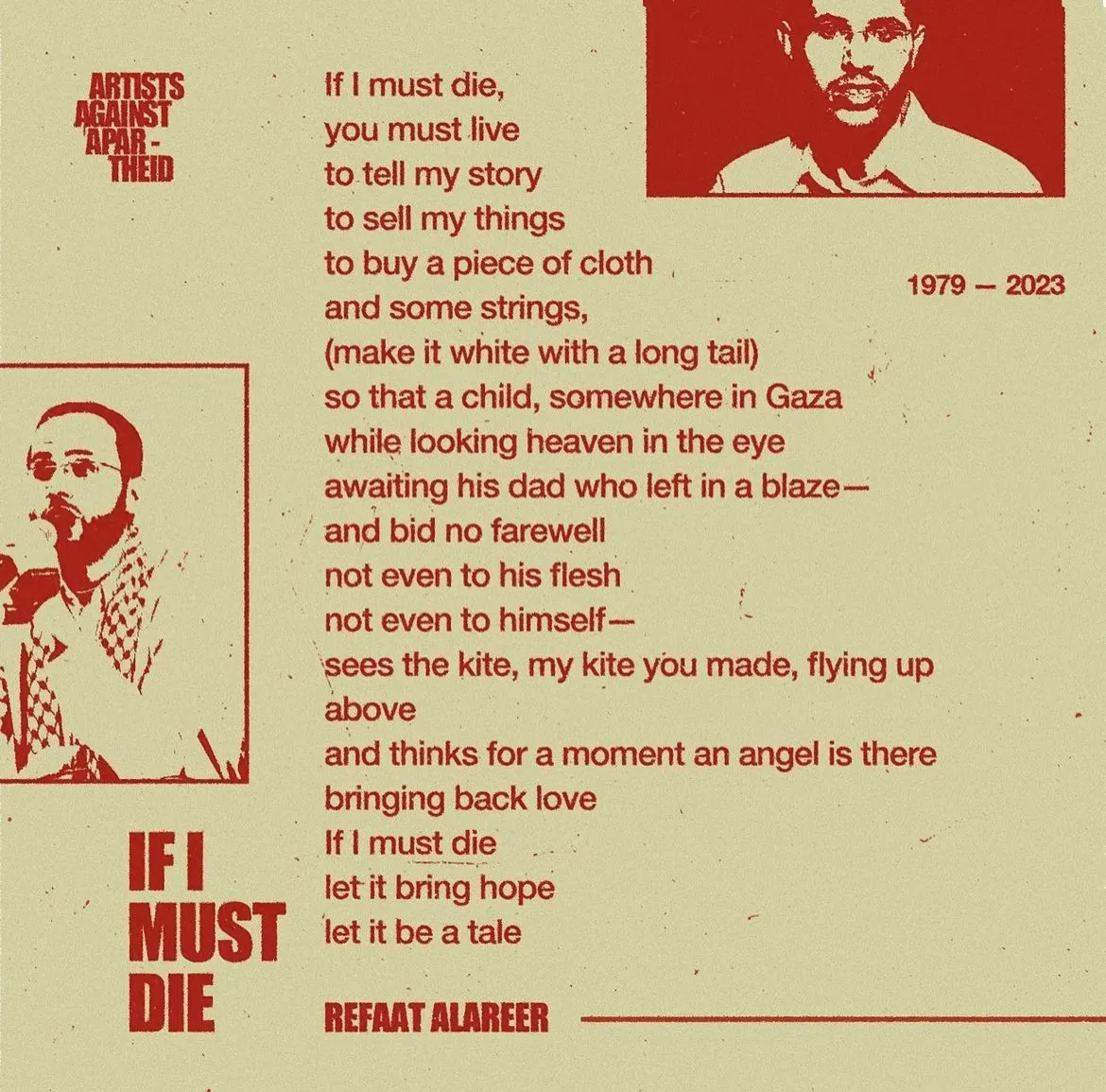
Reality, as you know, Robin, has been dark beyond collective imagination. As I am writing this today, I’ve just been reading up on the LA protests around Home Depot and the army that was brought in. We are living in a world where anything can happen, and the more we live in despair, the more we allow others to rewrite what is possible. Hayes and Kaba3 says that facts don’t change minds, even when facts are overwhelmingly in favour of our movements, but narratives do. At the same time, how many of us are lost in our narratives, clever enough to know something is wrong, yet lost enough to allow our stories to be written by others? Everywhere we go, we are told we have to be someone to do something—to be anything at all, we have to be great without a guidebook to tell us what any of that means beyond the lies told by capitalism. The most insidious is when we’re convinced we don’t deserve good things in the world—or even new worlds antithesis to all of this—until enough catastrophe strikes. I think of Rafaat Alareer in this moment, and the line “let it be a tale,” and how easily stories are forgotten these days. Maybe they just kind of sit heavy on our hearts until the next one comes along, flipping through them like a rolodex and not seeing the constellations we could be forming with them.
I’ve been listening to an incredible roleplaying/improv storytelling podcast called Worlds Beyond Number. The story follows three heroes of different (and at times competing) factions: the Wizard, the Witch, and the Wild One, a spirit trapped in the mortal realm. The Wizards represent imperialism, capturing all the ways that power is gathered and people are subjugated in order to maintain the ways of the Capital. Everything they do is to protect who they are and everything they’re taught to stand for. Our hero Wizard talks about the justification machine—the almost instinctive way they rationalize the Empire’s every move, even when she’s able to see the harm and people/spirits they hurt for the greater cause. They’re always fighting an invisible enemy. The Witch belongs to a coven that oversees forces far greater than the Wizards: the sky, the stars, nature, death itself to name a few. They view the Wizards as small fish in a small pond, yet the Witches are also not infallible as human beings. Our hero Witch is the Witch of the World’s Heart, and her domain is the connection and harmony between humans, spirits, and all living things. Her powers are not mighty, but she is driven to do the things that feel right, even when others seek to destroy her and her entire domain. The hero Wizard and the hero Witch clash over and over despite great love for each other, and despite competing ideologies, they also must learn to see the root of the other’s pain in order to maintain their love for each other, and by doing so, the justification machine begins to crumble. It’s truly a fantastic story, and so emblematic to be of what solidarity can mean, and the sacrifices we make for the things we believe to be just and right. Everything tethered by love at its core.
Some days, I find it really hard to love people and to believe in their capacity to love. Love feels trite when our profession—theoretically designed to heal by observing unconditional positive regard for all who need healing—can’t see past our own wounds. What’s happening in LA should be a rallying cry—none of us are exempt from the impacts of unchecked power, and I’m only too aware that things can happen to me and my friends in an instant beyond imagination. We can’t afford to not be in solidarity with each other, and yet here we are. These days, I find myself more ruled by fear than by love, and I don’t know what to do with myself. I asked O if we could disappear into the forest and go tree-planting for a few months—exit out of the narrative and forget the world for a while. I know my question about being lost in our own narratives was meant to be rhetorical, yet I have been feeling relentlessly lost in the face of Leviathan. Hayes and Kaba quotes Hazel Henderson in saying, “If we can recognize that change and uncertainty are basic principles, we can greet the future and the transformation we are undergoing with the understanding that we do not know enough to be pessimistic.” There are days where I am able to recognize the incredible privilege of pessimism—Ayesha Khan has written extensively about the collective responsibility of hope, after all. At the same time, today and tomorrow can feel so very hard. Raquel Isabelle de Alderete wrote this poem in 2018:
I want my daughter to shudder when I talk about the time I grew up in. I want my son to say, "Was it really that bad" when I speak about injustice. I want my child to curl up in my lap and whisper, "But people didn't know better back then, right, mommy?"
Because I want to say, "No, they didn't, did they? Things are so much better now, though, don't worry."
But I am terrified that if we keep picking our teeth with the bones of our neighbors, there won't even
be
a future
And, I swear, Robin, I’m thinking about Pauline Alexis Gumbs and “Evidence” and solarpunk utopias and being in that virtual room with all the dreamers challenging the institutional silencing of genocide. I think about all the people dreaming bigger than me, resisting the narratives, taking a hammer to the justification machines, and banding together to create that beautiful future for all of us.
Then, there are moments when I feel like my friends have given every last ounce of their all, yet we’re looking around and wondering where everyone is. I’ve probably told you a hundred times as this continues to haunt me, but we didn’t lose Hong Kong when the police marched in and teargassed our youth—they’d built barricades and they’d risked everything to preserve their world. From my perspective (caught in the limbo of diaspora and trying to make sense of all this alone and nostalgically yearning), we lost Hong Kong in 2019 when the world looked away and we turned against each other. Like LA, the dominant narratives were rewritten by the media, and supplanted the public’s consciousness of what was real: those students were scapegoated and arrested, and it wasn’t long before Hong Kong began to feel like they deserved it—as a wise friend told me, people who bring up the problem become the problem. While we pointed fingers at each other, the CCP did not hesitate to dismantle any semblance of a dream for democracy. Like so many, I grapple with the thought of never being able to return to my home land someday. Perhaps I should consider myself lucky, as it’s a grief I built over time, and not one I inherited from ancestors in exile like my Palestinian friends (and so, so, so many others). I wonder if ICE agents ever think about what it means to be in limbo and belonging to nowhere.
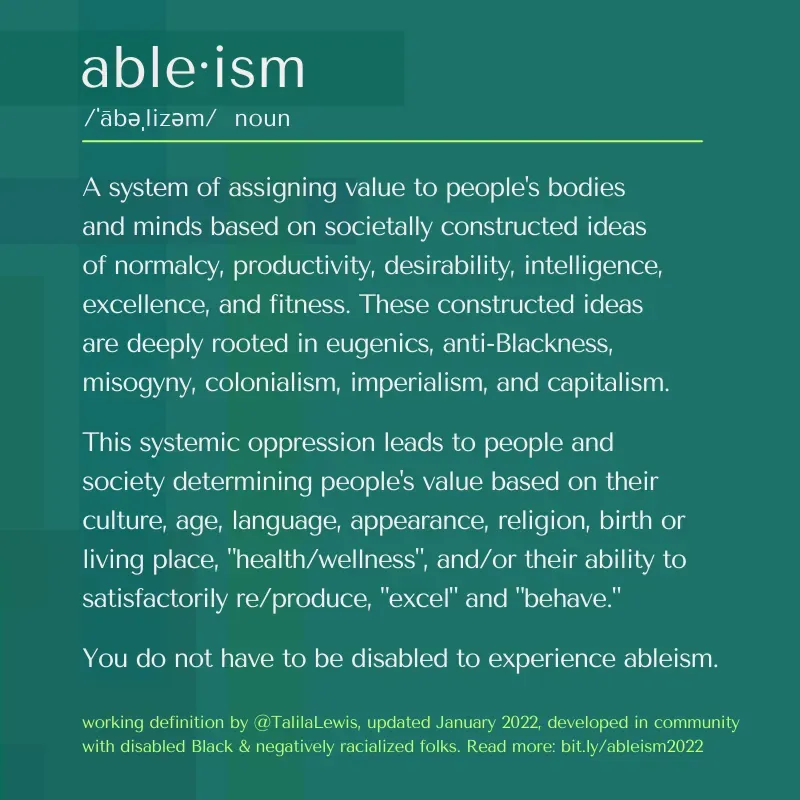
Isn’t it wild to think about how much we’ve normalized grief in this world? When we talked about showing up as our whole selves in practice the other day, I hadn’t yet considered how to bring the broken bits too. What’s the best course of action for these broken bits? Should we put them on display so others can run around and gawk at them? Should we share them? Trade them? Hide them away? I looked up TL’s various definitions of ableism, as you suggested, and still I can’t think of a word or phrase in this moment that so broadly captures the image that “broken bits” evokes for me.
We wondered briefly together on why it feels so challenging for marginalized communities to join disability movements, and in reading Eli Clare’s4 chronicle of the word freak, I wonder if we’ve simply established hierarchies of suffering. The level of comparison rife in the phrase “at least” is very anti-solidarity, isn’t it? As if to say that after a certain point, the suffering is justified. “The end of the freak show didn't mean the end of our display or the end of voyeurism,” Clare writes.
We simply traded one kind of freakdom for another… Today's freakdom happens in hospitals and doctors' offices. It happens during telethons as people fork over money out of pity, the tragic stories milked until they're dry. It happens in nursing homes where severely disabled people are often forced to live against their wills. It happens on street corners and at bus stops, on playgrounds and in restaurants. It happens when nondisabled people stare, trying to be covert, smacking their children to teach them how to pretend not to stare.
I think in many ways, all of us scattered across different fronts within the realm of justice regard each other with a morbid curiosity at a respectable distance. To various degrees, we’re all a part of the freak show—we’re all conditioned to look each other up and down and compare the worst parts of ourselves. Returning to my earlier point, even when we have a mutual respect for our separate causes, it feels harder than it should sometimes to hold it all in equal measure. Clare writes of disability and queerness in the same breath, and the power of pride beyond both of these realms:
Pride works in direct opposition to internalized oppression. The latter provides fertile ground for shame, denial, self-hatred, and fear. The former encourages anger, strength, and joy. To transform self-hatred into pride is a fundamental act of resistance. In many communities, language becomes one of the arenas for this transformation. Sometimes the words of hatred and violence can be neutralized or even turned into the words of pride. To stare down the bully calling cripple, the basher swinging the word queer like a baseball bat, to say "Yeah, you're right. I'm queer, I'm a crip. So what?" undercuts the power of those who want us dead.
I think of Robin Wall Kimmerer too, reminding us that the world is a gift, and Robin Maynard and Leanne Betasamosake-Simpson, writing on the world-making power of Black and Indigenous solidarity. I think of Mohammed El-Kurd and Billy-Ray Belcourt, writing poetry in tandem about liberation and extraction of their lands. Video essayists like Eliot Sang documenting the history of Japanese fascism alongside the efforts of Matt Bernstein and F.D. Signifier as they make sense of America’s unfolding imperialist projects. All of these amazing minds and so many more are pulling together so many threads—all of this speaks to the ways we fight alongside each other. As Nina Simone once said, “When everything is so desperate, when everyday is a matter of survival, I don't think you can help but be involved. Young people, black and white, know this. That's why they're so involved in politics. We will shape and mold this country or it will not be molded and shaped at all anymore. So I don't think you have a choice.” Democracy Now interviewed so many amazing humans at the No Kings protest on June 14th, and moments like this that I’m reminded of how small my immediate world is. Solidarity and resistance is everywhere.
I recently came across a radical astrologer writing on Substack, who wrote an article on the shifting of Jupiter from Gemini to Cancer. I don’t fully know what any of this means, but I do find myself leaning toward things I can’t make sense of sometimes and just gathering the energy of things beyond my comprehension. According to Jeanna Kadlec, Jupiter will be in Cancer from Jun 3 until June 30, 2026, and this means that we will be entering an era of community caretaking and protecting. Because Jupiter is traditionally aligned with abundance and generosity, it's supposed to thrive in Cancer. Kadlec adds: “Jupiter in Cancer knows that care is political. Who gets it. Who gets access to it. Who gets to be a parent. Who doesn’t. Who gets to take care of their community. Who can’t. Who is protected. Who isn’t.” It isn’t all sunshine and roses—in fact, little feels like it is these days. To me, it feels more like going to war to protect the things that feel sacred to us. Perhaps not war in the traditional sense, but I think about what you said about how much we need sweetness in this world…fighting with sweetness and winning with kindness, compassion, and empathy. As I write this, I resist the urge to laugh at how silly the imagery is—am I being naive, an inner voice asks.
But then I think…it’s so goddamn easy to be mad these days. It’s so easy to rage, despair, wallow, and rage some more. There’s so much to be angry about, and the little joys we have, it feels like we have to protect each moment with our life—so much can change from the moment we wake up each day.
I want to return to Worlds Beyond Number for a moment. There is an arc when the Witch of the World’s Heart is placed on trial simply for existing. Other witches in her coven deemed her station—connector of humans and spirits—to be useless, and if her role is to be destroyed, so must our hero Witch be destroyed. On trial, the Witch of the World’s Heart must quantify the value of her station in order to save her own life, and of course, how do we really quantify abstract notions like relationality and spirituality in a concise way? How do we rationalize the value of unquantifiable things in a world driven by hyper-quantification? So, perhaps it’s easy to count all the things that bear weight on our souls because they’re easily observable by our senses. It’s harder, perhaps, to count the feelings of being around people who make you feel less like we are the sum of our broken bits. The arc is solved only by the conclusion that more witches are better than fewer, so as not to consolidate power into fewer hands—her station ultimately remains unimportant to the rest of the coven. At the end of this, the Witch player/actor, Erika Ishii, jokes, “Another day not obliterated is a good day.”
Though it was said flippantly, this line stayed with me.
As I conclude this letter, the word “obliterate” has just been used to describe Iran’s nuclear sites as the US strikes to protect their genocidal project against all protocol. I think of what it means to be obliterated—how much of body, mind, and soul must shatter to reach the height of that word, and how small the pieces must be until it is rendered useless. To obliterate means that even the slightest glimmer of an idea must be erased from this planet, realm, and plane of existence to the point where no one will ever possess such an idea ever again. When I write this out, I see the impossibility of total obliteration. I used to think of every connection I make as an amorphous amoeba sort of being, absorbing parts of others, sharing parts of ourselves, breaking apart, growing larger, but always leaving pieces of each other in spaces we can’t always touch. Sometimes the pieces reverberate through time and space, picked up by faces we’ve never seen and will never see. Any one of these pieces could lead to stillness. Any one could be a revolution. Solidarity, perhaps then, is faith that we will never be obliterated.
Phi, B. (2018). “Revolutionary Shuffle”. In brown, a.m. and Imarisha, W. (eds), Octavia’s Brood (pp. 7-14). AK Press.↩
Not to be confused with 88Rising, an American record company boosting Asian voices and Paradise Rising, their subsidiary that focuses on Southeast Asian artists. So many incredible artists on their roster!↩
Hayes, K. & Kaba, M. (2018). “Beyond Alarm, Toward Action.” In Let this radicalize you: organizing and the revolution of reciprocal care. Haymarket Books.↩
Clare, E. (2015). “Freaks and Queers.” In Exile and pride: disability, queerness, and liberation. Duke University Press.↩